Category Archives: family

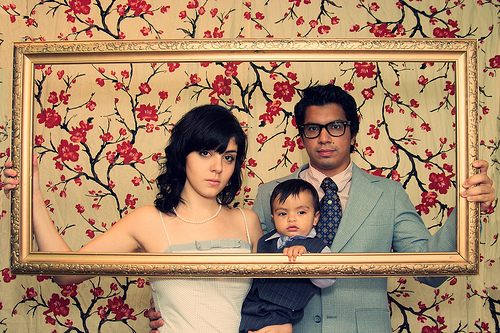
everyone is special and unique just the way they are

2376640269_edf992d4db

Who doesn’t love a cute and educational children’s television program? If you have small children, I’m sure you’re amazed by the wide array of supportive, nurturing programs that strive to be as educational as possible, given that most of them are commercial ventures. But what are they really teaching, and what does that message mean for the society this generation will construct?

I had the best intentions, before my kids were born, to limit TV time. I still do to a greater extent, I think, than many other parents (I like to think so, at least). I don’t allow them to see anything involving gun violence, up to and including cowboy-cartoon type shows. I try to restrict viewing of commercial programs (Nickolodeon) in favor of PBS and Playhouse Disney and movies. And yes, I know, Playhouse Disney is a 24/7 advertisement for the products of the Disney Corporation, but at least it doesn’t have blatant blaring Bratzz and Transformers ads every ten minutes.

So now that I’m digging a deeper hole for myself, admitting to familiarity with these programs, I’ll start off by naming MY favorite kids’ shows, and why, before going on to the horror at the bottom of the barrel.

The Wiggles: You could argue that the Wiggles don’t teach a thing. These four guys from the land of AC/DC dress in bright primary colors and do little but, well, wiggle around while singing songs about wiggly spaghetti. What I like about it, though, is that they do encourage a lot of movement in kids - my children love to dance to Wiggles songs. They also like Talking Heads, though, so maybe it’s just the music. But it’s the ONLY show I’ve ever seen inspire actual movement, as opposed to zombie-like lounging.

Little Einsteins: The Little Einsteins take a few bars of a classical composition, artwork of some sort and then use these “tools” to rocket around the world to save a moose, help the baby monkey find his lost rattle, and so on. I’m not sure what’s being taught, but I know that constant exposure to classical music in Bugs Bunny cartoons at least made me recognize the music later in life. Unfortunately I refer to “The Ride of the Valkyries” as “the one where Bugs is in Viking drag on a giant horse chasing Elmer Fudd.” Freud, start your engines. Little Einsteins don’t have much Viking drag.

Mickey Mouse Clubhouse: Yes, because of this show my kids have Disney deeply implanted in their skulls. The title song - by “We Might Be Giants” - doesn’t make up for that. But this show surprisingly seldom gets as condescending as many shows (I’m looking at you, Dora) and puts a great deal of emphasis on counting, collaboration and goal-setting without resorting to mind-numbing repetition.

The Penguins of Madagascar: OK, I don’t like my kids watching this show. It’s utterly non-educational. Four penguins who act like a Delta Force team are engaged in constant shenanigans with the preening, annoying king of the lemurs, King Julian. Everyone acts crazy. But the dialogue is snappy - unlike the lethargic, repetitive pace of most shows - and that alone makes it more enjoyable. Not for them, for me. This show is more fun for me. I deserve a break, for God’s sake.

So those were some of the good ones. Now for the ones that make me shudder:

Curious George: OK, I like Curious George. I like the books. The monkey’s fun, the artwork’s cute. But think about the very odd living situation of the man in the yellow suit. He lives in a penthouse on Central Park with his monkey. Is it too soon for Michael Jackson references? The monkey creates endless havoc, does exactly what he’s told not to do and is often saved by others who put themselves in peril to do so. This show basically says “go ahead, do stupid and dangerous things and people will chuckle.” Don’t get me wrong - I like a “take chances with life” philosophy, but someone stifling your dreams of becoming a poet is a far different scenario than “George, don’t play on the conveyor belt”.

SpongeBob SquarePants: I told my kids that Sponge Bob was canceled and not on the TV anymore. I couldn’t take it and I saw no other way out. Much like Curious George, the premise of the show seems to be that being an idiot is something to emulate. The running side gag - that a flea is trying to steal the recipe to the Crabby Patties Sponge Bob makes - as a burger-flipper - annoys me. SpongeBob works at McDonald’s-Under-The-Sea. He aspires to nothing, contributes nothing, annoys everyone and harasses his neighbor, Squidworth. No point, no attempt at education, and the products based on SpongeBob are EVERYWHERE.

Dora the Explorer: Quick poll. If you plop kids in front of an episode of Dora, what do they do when Dora asks a question? She asks, pauses about 5 seconds, then says “That’s right!” My kids say nothing. My kids have not learned Spanish, either, as a result of Dora, nor do they need to do so. I’d rather have them watch Telemundo and learn spoken Spanish, not Dora’s Spanglish. Dora is tedious, repetitive and the attempt at interactivity is painful. I’d rather see kids play a Dora game on the computer where they could actually click the mouse around, rather than the stupid effect of having a pointer fly around the TV screen, clicking. Vaminos to a different channel.

(catchall) Any show that teaches kids that they are unique and special just as they are. It’s a common rant - I’ve heard both Adam Carolla and Anthony Bourdain rant on this recently - but it’s true. I wrote a post about “8 steps to a six figure career.” Not one of them said “you are special and unique, just as you are, and nobody’s like you, and because of that everyone will recognize your specialness and give you a six figure salary. Just for being you. Sweetie.” Even Paris Hilton has to get out there and hustle for attention. She has to distinguish herself from Lindsay Lohan, Tara Reid, a host of minor B-list drunken actresses and singers. Not everyone is special. People make themselves special through effort, not through entitlement.

Everyone can MAKE themselves special, but even Tiger Woods practices. Kids need to learn that being special and valued and unique is the work of a lifetime, not an entitlement. I made myself somewhat special by learning Russian, living and working for years in Russia. That took effort. Without that, I am just another guy with an MBA from a state university, working the traditional corporate path. I made myself stand out. Children need to be taught that inherent intelligence is NOTHING if not put to use. Special abilities (drawing, music, athletics, language, whatever) are also worthless unless used and developed. The idea that you can sit on your butt doing nothing and call yourself special is laughable, and the attempt at building self-esteem is going to implode when these kids realize, as adults staring at the clock in the cubicle at 4:52 pm, that all of the bubbly anthems declaring that “everyone is special” were a lie.


photo by IntangibleArts

why you shouldn’t worry about your children’s future

Image and video hosting by TinyPic

I spend an inordinate amount of time worried about the trivial aspects of child-rearing. As a confirmed bachelor a decade ago, I would have though my concern laughable. Only soft-headed parents sat around worrying about their children hearing Mozart in the womb and being exposed to ecologically sound psychologically pleasing alphabet posters. The idea of grooming children for greatness seemed stupid. Care to debate breast-feeding, anyone?

Now, after spending more than three years with two small children, I’ve been through the fire and back over to the other side. I spent years thinking that if my kids whimpered in their sleep, they needed to be held. If they couldn’t figure out the difference between two fingers and three fingers, they needed to be TAUGHT … NOW. For a while, every moment had to be a learning moment or it was a lost moment. The simple fact is that children are rough beasts, and little we do can really influence the humans they will be.

Extremes exist, of course. Extreme abuse can hurt, and extremes of nurturing can help. Wealth and influence help. I have no doubt that the children of the Bushes, Kennedys, Clintons and Obamas of the world have more access to better experiences and tutors and influences than I can hope to provide. But I have seen children of caring, loving, involved parents turn into low, desperate adults. I have seen children who had no positive parental influence at all turn into amazing, positive and caring adults. I have seen the opposite - caring, loving, involved parents who raised caring, loving, involved kids. What I have never seen in my life - to date - is a pattern. Kids are gonna vex ya.

We are all shaped by a multitude of influences. I count things as grand as my years in Moscow as an influence, but I would argue that I was just as deeply and permanently influenced by reading The Lord of The Rings when I was young. Digging back further, the time spent listening to my father read chapters from “The Hobbit” opened up an intellectual curiosity in my mind. I can count the momentary influences in my life that left deep impressions on me just as easily as the long-term influences. An evening spent playing Titanic with my parents might have had as deep an influence on me as my college education.

If you don’t have children, I think this lesson still holds true. Don’t worry too much about the influence you think you have - or don’t have - over others. We overestimate our own influence, because we are human. No matter how in touch we are with ourselves, WE are the universe. It soaks into everything - I write about personal finance because MY personal finances OUGHT to be the subject of praise/disdain/etc. Some basic principles hold true: in personal finance, don’t go into debt; in life, don’t hit women (for example - an inarguable principle). Core values are unalterable. We all want to be important, and the hero of our own lives.

But don’t worry about your children’s future as much as you do. Do what you can to be open, happy, and present. Everything else will be a bonus. The best college? Extra. The best cars or stuff? Extra. Even that extra book at bedtime? Extra, to be honest. Don’t worry about your friends or your family - do your best to be present above all else with them, and let them do what they can with that. If you put the best YOU out there that you can, you’ve done a good job. Your children can feed off of that better than they can a million trips to the mall.

photo by alessandro pucci

how to have a happy childhood

Here comes the sun...
Over the last few weeks, as we’ve discussed our move to Florida with other parents, the inevitable comment - other than the “oh there’s no state income tax there” or “oh, the cost of living must be much lower there” - has been “think of us when it’s October and you’re outside playing and we’re stuck at home.”

I grew up in the Deep South. Winter meant jackets, not heavy coats, and snow meant a dusting and a nuclear-war level alert by the local school districts. A half inch of snow meant weeping mothers, runs on canned foods at the supermarket and preparations for the breakdown of society. As kids, snow wasn’t really much of a factor one way or another for us. Life was the hot season and everything else.

Yet I’ve spent three winters with a child in the northeast and learned that the seasons of a childhood here are the outdoor season and the indoor season. This year, we had a long indoor season. When I lost my last consulting contract, we were faced with an odd prospect - Papa was going to be home all winter but we had to watch money because we had no income coming in.

I count myself lucky. My wife and I, despite having many differences of opinion on money, have aggressively saved against a day such as…well, these days. The long cold winter wasn’t filled with trips to Disneyland but it wasn’t filled with Ramen noodles and sweaters-versus-50-degree-thermometers, either. We had the means to prepare.

But at the same time, I had a long winter not working - unless you count blogging as work - to think about what made a happy childhood and one of the recurring thoughts I had was that outdoor time was precious. I’m not sure about my daughter yet, but my son appears to rocket into full form when he’s outdoors. He seems happiest outside. He seemed restricted and bored indoors throughout the winter, and once a mild spring/summer (whatever this miserable pseud0-season is here in New Jersey) arrived, he launched outdoors with a vengeance. His childhood - at this early stage - could appear to be defined by the ratio of indoor to outdoor time.

I know some people will wax nostalgic about snowmen, or snowballs, or mulled tea. Not me. For me, a happy childhood - and to some extent, a happy adulthood - are directly proportional to warm days. Wish me luck as I seek to prove this theory. 🙂

photo credit: chantrybee

how to soothe a crying baby

A life lesson, using a child as an example: when my son was born, we were good parents. When he cried, we ran to him. We rocked him, sang him comforting songs in English and Russian. We gave him milk to get him to sleep. We slept in the room with him. We still do. He sleeps in fits and spurts. He’s a great kid, but his sleep patterns are erratic.

When my daughter was born, we were good parents. When she cried, we waited. We rocked her sometimes, but put her down at the first sign of drowsiness. We sang to her when she was awake, but never to put her to sleep. We gave her milk sometimes, but often put her to sleep long after milk. We never stay in the room with her. She sleeps through the night occasionally - something we never could have imagined with my son at her age, or even now.

The life lesson? Constant attention is not always the answer.

1. Your spouse does not need your constant attention. People are individuals. When you get married, you are not a cyborg unit, a fusion of male and female (or otherwise, depending on your state’s legal system). You are two individuals who love each other. Back off a bit sometimes.

2. Children need to grow and explore - and here’s the shocker, they don’t need you ALL THE TIME. I thought I had to entertain my son 24/7. He’s a brilliant boy (I’m an objective observer) but he’s highly dependent on interaction. Maybe that means he’s going to be president in 2044. Who knows? But my daughter already shows independence and the ability to entertain herself. One of the keys to life is to be happy with yourself, and although that can come from interacting with others or from spending time alone, kids do need to develop the alone-time skill first.

3. Work does not require constant attention. Back off a bit. Have a life away from work. Don’t think that your company will fail without you. It will not. I promise you. Try it - stay home for a day and turn off the phone and email. It will still be there tomorrow.

4. Money will wait. If your finances are great - or shoddy - they will not change drastically if you look at every penny or if you let slide a few dollars. Make an overall guiding philosophy, then let the small things slide. Constant attention to every expenditure in your life is not necessary.

The term “accidental parenting” applies to a lot of decisions made by parents - overindulgence in one area creates problems later in life. “Accidental life planning” or “accidental money planning” would be equally apt terms. I’ve always found it amusing that I’m considered one of the most draconian and strict parents in my neighborhood. I don’t view myself that way, and according to most of the parenting books I read we are on the lax end of the scale.

The most important thing to learn is that nobody benefits from being treated like a baby, not even babies. Not friends, not family, not kids, not parents. Our financial, social, intellectual and spiritual lives don’t need to be treated like babies, either. Push your kids and your own limits and you’ll all benefit. Push yourself and limits won’t matter.

why you’ll be richer without kids

Bri, Joel & Indy
Raising a child can cost up to $250,000 - and that’s from a study done almost 20 years ago. That’s only the cost through high school - college is another problem entirely, unless you don’t plan on paying for your child’s education (and I don’t). Having a kid is expensive. Having a second is less expensive - hand-me-downs and shared costs can reduce the individual costs - but a larger family is going to cost a fortune. The simple fact is that you won’t become AS rich with kids.

I’ve seen the question of children play out a dozen different ways with friends and in my own life. My parents had kids (my brother and me) when they were barely out of their teenage years. I have friends who waited until they were almost 40 to have kids. One couple fervently and frequently insisted they would never have kids - and show no signs of changing their minds. In each case, the decision to have a child (or children) was deeply personal, and made for a number of reasons - but seldom considering the cost. The simple fact is that you’ll be better off financially without kids. Kids are expensive.

It’s a potentially sensitive topic … and most people don’t want to have that conversation. “Kids bring so much joy into your life!” “Kids are their own reward!” I’m biased - the cliches are all true. My son’s a supernova of energy, creative and amazingly verbal. My daughter’s charming and almost impossibly cheerful. They are joys. But to be realistic, I have to admit that because of them I will not be as wealthy as I could have been. I regret nothing, but I also understand that I’m going to have to work harder accumulating wealth than I would have without children.

So how do we plan to compensate? If you have kids, how can you avoid spending more than you need to? It’s not the nature of my blog to talk about ways to save money on Cheerios by buying the store brand. But I do have a few “big ideas”:

  1. I’m not paying for my kid’s PRIVATE college education. If Little Buddy wants to attend a private school, he’d better develop his tennis skills or become a world-class scholar. I’m not paying for Pumpkin to attend an Ivy. I’ll help, but if they can’t pay for a private college, they can go to a public university, just like Mama and Papa did. We did just fine.
  2. We will readjust our lives around their education early on, though. In the city we live in (the New Jersey “suburbs” of New York) the public schools are awful. I am, however, firmly opposed to private schooling. We will either move to find a good public school district, or homeschool. I’m increasingly set on that idea.
  3. I will strive to teach independence. This sounds stupid, but I have seen so many of my colleagues in corporate America talking about their mid-20 (or even mid-30) year old children living at home. I know I can talk big now, but I left home at 18 and my children will too. If we’re still living in the NYC area and they can’t afford a home, I’ll tell them to move to a cheaper locale. An unmarried 35-year-old living with their parents needs to experience life.
  4. We will resist consumerism. My neighbors bought one of those big car-battery powered cars - with a working FM radio - for their daughters. Little Buddy loves it. I was tempted to get him one. He doesn’t need it. I have fallen victim again and again to the urge to buy toys. Sometimes it makes sense: I bought him a farm set that he plays with daily. Sometimes I fail: I have bought a half dozen balls (football, baseball, soccer) and he is utterly indifferent to all of them that don’t have Spiderman on them. But I see a sickness in most parents around me: the need to buy distractions. I struggle to remind myself that learning to pretend my wooden blocks were race cars taught me to IMAGINE things. My parents would have done me a disservice by buying me Hot Wheels. Learning how to live with less - at least as far as toys - is a gift, not a burden.

But none of these cost-saving ideas can compensate for the fact that a childless couple (or a single person) will simply be much better off than a couple with kids. I won’t recommend one choice or the other, because it’s such a personal choice. But don’t let anyone tell you otherwise: in the short term, having kids is no big deal. You can afford formula, diapers, baby clothes. But in the long run, having kids will change your career choices, affect your ability to save and limit your choices about almost everything. Make sure you’re comfortable with the long-term cost before you take the leap.

photo credit: Kevin N. Murphy

second marketplace interview

As I mentioned yesterday, my second marketplace interview with Jim of Blueprint for Financial Prosperity and Lynnae of BeingFrugal.net is now available. You can listen to it here. You can also download an MP3 of the show here. If you like the interview, it would be a great help to Digg it (just click that link) or use some other social media to promote it. I think it’s a good interview - I hope you agree!

If you’re just arriving at my blog for the first time after hearing the show, welcome! Here are a few of my most popular posts on money:

  1. 38 random thoughts on building prosperity
  2. a little-too-late advice on building wealth
  3. spend less than you earn - the wrong way to think
  4. follow the white rabbit to financial freedom
  5. how to talk to your teenager about personal finance

And some other posts which have also been popular:

if you believe they put a man on the moon

This is a reprint of an article I published then took down because I was concerned my client at the time might figure out who it was about. Since that client is long in the past, I’m putting it back up. I’m reprinting an old article because it’s been a hell of a week - the industry I work in (financial services) is collapsing, I’ve been struggling with a meltdown client, multiple utilities have been down in our house and last but not least my daughter’s been suffering through thrush (a throat infection). Hopefully I’ll be back on track next week!


photo credit: Rhys Jones Photography

When I started working at my current client, I was lucky enough to get an office that was being vacated by a retiring officer. This arrangement made things very simple for everyone – no need to set up a new desk, get a new PC or even get office supplies. I just sat down and started to work.

Imagine my surprise when I found out last week that I was ‘unofficial’ and technically just squatting in the office. I probably should have suspected something since I never received an extension or voicemail (irrelevant to me, though, as a Grand Central user). So a small political disagreement arose between the head of my sub-department and the head of another sub-department over the usage of the office.

I was not terribly concerned about the office. As a consultant I’ve grown accustomed to cubicles and random desks here and there. I found that losing my corner office with floor-to-ceiling windows and a view of lower Manhattan only affected me for a month or two. After adjusting to the lack of an office, I have become uninterested in my physical location as long as I have the basic amenities – a moderately comfortable chair, some tabletop space and adequate air and light. Sounds like I’m a hamster, practically.

The next step in this process, though, was ridiculous. The company has tight budget on the purchase or lease of new PCs, and I was told that temporarily I would have to share a laptop computer with one other consultant (from a different company) and an employee. More than just the logistical insanity of a setup like this, the sheer short-sightedness of it was amazing. I protested that I would just bring my own laptop from home and at least piggyback onto the nearby public library WiFi. I wouldn’t be able to get on the company network but at least I could work offline on reports or documents.

After inquiring why I couldn’t keep the desktop I was currently working on, I was told it was because as an ‘unofficial’ they didn’t want to alert the department executives that a move was taking place, because it might alert them to the empty office and spare equipment. Sadly, it took me two days to realize what this meant – the employees weren’t going to physically move the computer without a work order and the desktop was going to become a paperweight. The office was going to be converted into a room for several new consultants, and they were bringing their own computers.

Frustrated by all of this, I decided to do something myself. So I solved most of my problems this morning by simply unhooking the desktop and physically carrying it over to my new cube and plugging it back in. This bold and decisive step took some of the regular employees back and I was told to assume complete responsibility if asked how it was moved, since apparently I could trigger all sorts of ‘asset removal’ problems. And of course my new cube is also ‘unofficial’, so I continue a vague status as a gypsy consultant. My pay continues to arrive, though, so the other details remain fairly inconsequential to me.

With a decision-making and action-taking process like this I wonder about the future of American business. It’s hard to believe we put a man on the moon sometimes.

10 reasons to be a good neighbor

Seaside garden

I certainly have a mixed-bag relationship with my neighbors. This article made me think about that relationship. Several of my neighbors are very pleasant people. Some are worthless - and I mean that in the nicest possible way. The trick, when living in a townhouse community like I do, is to coexist with a minimum of headaches. Here are ten reasons I struggle to coexist with my neighbors:

1. Da kids. My son has a lot of good friends his age around our neighborhood. In the normal course of events, I might not have crossed paths with his friends’ parents, but for his sake I hang around with them - and eventually it has paid off as I got to know them.

2. Zen housing. It’s just easier to live your life if you don’t give your neighbors a hard time - primarily because they won’t give YOU a hard time.

3. Speak no evil. If you do something, well, semi-illegal like having a bar-b-q in an area where technically bar-b-q’s are, well, semi-illegal, it’s nice to be on good enough terms with the neighbors not to worry about tattle tales.

4. Lookouts. If you go on vacation, you’re going to want someone to watch your place. I’m wouldn’t expect anyone to be a hero, but just stopping someone from backing up a truck by calling 9-1-1 would be nice.

5. Saving money. You can save money borrowing a rake if you’re on good terms with your neighbor.

6. Being able to pick on the little things. If you’re on good terms with your neighbors, it’s a lot easier to ask them not to shovel snow in your driveway than if you’re barely on speaking terms.

7. Built in socializing. If you work at a job with late hours or long commutes (or both) it’s nice to have someone 100 feet away who you can socialize with, rather than needing to hop in the car and drive halfway across town with kids in tow to meet someone for dinner.

8. Networking. Oddly enough, since I live in a neighborhood full of people who commute to lower Manhattan I’ve discovered that I have a lot of networking possibilities from people who I know due to the accident of living in the same neighborhood.

9. Advice. If your neighbor’s been in the area longer, you’re going to appreciate getting to know them all the better when they can recommend the best neighborhood plumber or dentist.

10. Longer life. Most studies of happiness show that most people’s happiness relies on a few basic factors. A healthy relationship with your community increases your happiness, decreases your stress and thereby lengthens your life.

Everyone realizes that life is easier if you have a good relationship - or at least a neutral one - with your neighbors. The problem is that unless you have kids (or dogs, I guess) who sortof force you into socializing situations you’re often going to have a tough time forming a connection unless you’re the naturally gregarious type. The benefits are there, though, so just remember that the next time you see the neighbor you don’t know so well out on the street - say hi and walk a while together.

photo credit: *Susie*

~~~~~

And just in passing, I was saddened to see that David Foster Wallace (apparently) committed suicide. I was not a huge fan, but having read a few of his books and nonfiction works I was struck by how terrible it is to see another talented artist giving in to his demons. His writing was amazing. A shame, a shame, a shame.

short term, long term

I confess that a lot of the advice I give on this blog is often something I don’t do myself. I’ll give a good example: on Memorial Day we had a bunch of relatives over and did a big “shashlik” - a Middle Eastern/Far East/former Soviet Union form of lamb shish-ka-bobs - had a few drinks of the little water and spent most of the day lounging around under a tent outside my townhouse, enjoying the first 80-degree day in the northeast this year. I didn’t think or worry about money, or this blog, or my financial freedom, or anything else, other than eating, having a few drinks and enjoying some leisure time under the sun.

I also bought a mountain bike and a child carrier seat this weekend (not frugal), and spent a lot of time riding around with Little Buddy exploring the neighborhood. It’s decent exercise - it’s not exactly jogging, but it’s fairly difficult considering we’re on a riverside and near the Atlantic, so we have harsh and heavy winds quite often. The point being: I was tired at the end of the day after eating FAR more than I have been accustomed to, exercising a lot and soaking up a lot of heat and humidity. Little Buddy was beyond giggly after receiving bike rides and Spiderman sunglasses to keep his eyes from tearing up.

So I lounged in my easy chair last night, glanced at my computer after a long day of eating, drinking and biking and thought of Brip Blap and decided “eh, forget about Tuesday.” In the same way I didn’t spend any time doing anything to better my financial situation, to make myself more fit or more wealthy. I chucked a day overboard.

I’m not really sure if this is a good idea or a bad idea. I’m not sure that I’m the type of person to devote myself single-mindedly to wealth-building. I think someone who WAS single-mindedly devoted wouldn’t MIND worrying about it. My brother-in-law, who’s a lifelong entrepreneur, fielded phone calls all day long about business ideas from his friends and business partners. I think he does a lot of this - I spent some time talking to him about his real estate investments and I was left, as I always am, a little bit dumbfounded by the amount of risk that risk-takers seem to take on without pause. I know a lot of people would say “oh, spend time with your family, don’t worry about tomorrow” - but is that short-term thinking? Should I be thinking about being financially free when my kids are in their early teens, or worried about spending a few extra hours with them now when they (based on my own experience) won’t really remember it?

But here’s the main question: am I a lazy git for jettisoning one of the last few free days before my next contract kicks in on watching the clouds, biking around with my son, eating shashlik and drinking vodka Russian old-school style? I don’t know. Part of me says no, it’s fine: life trumps the crass pursuit of money. Part of me says, yes, you’re a dope: first you waste a day here, then one there, then 10 years are gone and you’re whining about working until you’re 65. It’s a tough balance to strike. You want to be rich, but you want to enjoy it while you’re young; you want the enjoyment of running around with the kids and playing soccer instead of hammering away at your portfolio or working on your side businesses until you’re falling asleep at 3 am.

So it’s gone: Memorial Day is shot as a wealth-building day. I spent it drinking, eating, playing, talking and laughing. All well and good, of course, but then again it’s spent and it’s one more day I didn’t get any closer to financial freedom. I’m not sure sometimes that having financial freedom in my 50s and 60s is worth having nose-to-the-grindstone days in my 30s and 40s. Probably I’ll have a different opinion 20 years from now - if I’m still writing for this blog then you can check in and see.

The struggle between this long-term and short-term thinking is probably at the core of my mental struggle on a daily basis; trying to decide whether a short-term benefit outweighs a long-term benefit accompanied by short-term effort. Most people probably say fine, I’m going to charge this plasma TV or this Wii on my credit card and have fun TODAY - to hell with tomorrow, I’ll be old and won’t have any need for it then. Making that exchange once, or twice, or three times might be acceptable - but paying for your happiness today until you’re 65 or 70 is something I dread.

Creative Commons License photo credit: Stewart

how to be a good partner to a stay-at-home spouse

You may not realize it, but being a good spouse to a stay-at-home parent is a hard job in and of itself. There are few key actions you can concentrate on to try and help each other. I am terrible at almost every single one of these tips, so for once this is not a list where I’m preaching; I’m trying to inspire myself as much as anyone else! Also please note that I did my best to stick with the ‘spouse’ wording, because I’m always very concerned to avoid any hint of sexism in implying that women should automatically be viewed as the caregiver. If you’ve read my blog for a while, you know that I have goals to become a stay-at-home dad one day!
Herewith, then, my ten tips:

1. Don’t ‘decompress’ for an hour after you get home. After a long hard day at the office, your first temptation may be to fling yourself down on the couch, or jump in the shower, or go check your emails or any one of a number of ‘decompression’ activities. This behavior is understandable, but it does not help. Your spouse is still ‘on the clock’ while you are decompressing, and waiting for their own chance to relax.

Solution: Take a maximum of 15-30 minutes after you arrive home to change, wash up, and shake off your day - and then plunge into chores, child care, playtime and bedtime activities. You may think it is more relaxing to watch ‘Deal or No Deal’ but in reality you’ll be happier if you have a clean house, relaxed spouse and happy kid(s).

2. Take care of chores without ‘dividing them up.’ Sometimes deals work out well. My wife and I divide bedtime and clean up chores: if one of us puts Little Buddy to sleep, the other one cleans up toys and washes bottles. However, you can’t think of this as a zero-sum game. There will come times when you may come home later than usual and your spouse has to do everything - so don’t begrudge times when your spouse just can’t manage to summon the energy to pick up Elmo.

Solution: Don’t keep score. Don’t say “I did everything yesterday, so YOU do it all today.” Consider each day a clean slate, with no balance sheet of dids and didn’ts. Do everything you can, and do critical tasks first. If you don’t wash all of the dishes, let it go for a day if you’re too tired - but if the last baby bottle is dirty, you have to summon some energy.

3. Give the gift of break time. Probably the single greatest gift you can give a stay-at-home parent is the gift of half an hour to do nothing. Having a child at home, particularly a young one, requires near-constant vigilance and activity. Even during nap times a monitor is usually hissing in your spouse’s ears.

Solution: Let your spouse go take a shower or read a book or whatever relaxes them, and pretend to yourself that they’ve left the house. Don’t go get them when Junior poops, or asks for milk, or breaks a lamp. Give them 30 minutes of uninterrupted solitude.

4. Don’t be selfish with your own ‘me time.’ As someone who is out ‘in the world’ you have quite a bit of freedom. If one night you decide to go for a while with coworkers, remember that your spouse, in effect, is trapped. They can’t do the same thing - their ability to pop out for a drink or whatnot is limited by you and the babysitter.

Solution: Generally, you should never go out on the town without a day’s warning. Don’t call your spouse at 6 PM and tell them you won’t be home until 11. It’s simply not a nice thing to do. “But these things just come up spur of the moment sometimes!” you might say. Too bad. You’re a parent, not a 23-year-old. Go home.

5. Remember you are less expert in your child’s moods and needs. You may think you have a good understanding of your kid(s), but the simple fact is that you don’t. You may see them for 2-3 hours during weekdays and 2 days on the weekend. You probably only spend time alone with them for a few hours a month, total. Your stay-at-home spouse sees a lot more of your kid(s) than you do, and knows better that when they ask for “raygun” they mean raisin, or that they don’t really NEED another glass of juice.

Solution: Don’t override your spouse’s decisions on food, clothing, behavior, sleeptime, playtime and so on. You have to become a good soldier in this case. If your judgment is called for, or if you’re giving your spouse 30 minutes off, do what you want - but don’t get into an argument because you think you know best. You don’t.

6. Back off. Sometimes the sad truth is that you may just be interfering while thinking you are helpful. If you are crashing around during bedtime getting in the way, keep in mind that you may be making things worse, not better. Two heads are not always better than one.

Solution: If your spouse doesn’t say anything, assume you’re helping. If they tell you to leave, leave. Don’t feel bad about not helping. Your spouse should be comfortable asking for help, and you should be comfortable when you’re asked NOT to help.

7. Don’t bring work home. As immersed as you are in your work life, you should leave it behind. Your spouse will not care for stories of workplace stupidity or evilness, because it’s painful to hear when you’re tired. Your spouse will have even less desire to hear about workplace fun and shenanigans, because it may make them regret being ‘stuck at home.’ Remember that you are not defined by your work.

Solution: Talk about your children, your goals or other subjects that interest you. Leave gripes about Homer from Quality Control at the plant. Incidentally, leaving work at work will make you happier, too.

8. Try not to undermine ‘wind-down’ time. If your kid(s) go to sleep at a reasonable hour - and hopefully they do - don’t come home and start playing ‘swing from the monkey bars’ or ‘jump on the couch’ with them. You can ruin a whole evening by making your kid(s) hyper right before bedtime.

Solution: Keep it quiet. No matter how tempted you are to play, keep things low-key. Read, sing, play imagination games or whatever you can do to stay quiet. Reading is the perfect activity in the evenings.

9. Turn it off. If you have a cell phone, or a blackberry or access to corporate email, turn it off the second you walk in the door. There is no excuse for spending any time on work while your kid(s) are still up and your spouse is home. Turn it all off. Unless you are negotiating the solution to the subprime crisis, chances are good that the email can wait until after the kid(s) are asleep.

Solution: Easy. Turn it off.

10. Remember that this is a team effort. If you are the primary breadwinner and your spouse is the primary caregiver, it’s easy to forget that one couldn’t be successful without the other. Even though the money is ‘yours’ and the parenting is ‘theirs,’ both of you effectively are responsible for 50% of earning and parenting - you just turn around and outsource it to each other. However, starting to think that you are the only one who should spend or make money decisions because you work is asinine. If your spouse starts to think that parenting is too hard and you’re off having a ball at work, that’s not fair.

Solution: Take a look at your kids while they sleep… and that will remind you of what your ‘team’ is all about.

So many things in life are tough. Being a good partner isn’t one of them, if you approach it in the right way!

(photos by powerbooktrance and by M.ADA)

Related posts:

Recommended reading:

  • Secrets of the Baby Whisperer I can’t recommend this book enough, particularly if you have any trouble putting your children to sleep!
  • Happiest Baby on the Block The name says it all - if you have a baby, learn swaddling and rocking!
  • What to Expect the First Year I found this book tremendously helpful as a reference, and it made me a better husband to my stay-at-home wife simply because I had something to refer to when I had questions and didn’t want to bother her!

rich mom, poor mom

My ‘poor’ mom believed that by working and giving me things she was doing the best she could for me, even though it meant I was raised largely by daycare and babysitters first, then after-school programs later. She loved me as deeply as any mother loves her child, but she made her career a priority, spending 50+ hours a week away from me. She did this thinking that was the best way to provide for her family.

My ‘rich’ mom stayed at home with me, participated in my life and gave me the best care she was able. My rich mom couldn’t always buy me things. Other kids had DVDs and Wiis and iPods. We had board games and the radio. My rich mom was just as smart and educated as any working mother, but she made her children a priority, knowing that nothing else would matter more than them in the end. She did this thinking that was the best way to provide for her family.

Robert Kiyosaki, in his famous (infamous?) book Rich Dad, Poor Dad, laid out the idea of having had “two fathers” who taught him different lessons about life. One (his biological father) taught him that hard work, a good job and lots of education were the keys to success. The other (his best friend’s father) taught him that hard work, investing your money in assets and frugal living were critical. The former, the “poor dad”, was wrong, and the latter, the “rich dad”, was right - according to Kiyosaki. Interestingly enough, Kiyosaki focuses solely on the money lessons of his fathers. So let’s be sexist for a minute and say that the father represents the “outside” world - money, work, achievement. Let’s imagine that we could frame the same rich vs. poor argument for moms - but in terms of the family and its emotional life.

Quick disclaimer: in this article I use the term ‘mom,’ but it’s not meant to be sexist. The ‘mom’ below could just as easily be the man in the family, and I always want to point this out. I plan to be a stay-at-home dad sometime in the next ten years, once we are financially independent. So substitute “parent” for mom and you’ll get the idea. Rich parent, poor parent just didn’t have the same ring to it.

Rich Mom, Poor Mom

The rich dad taught Kiyosaki that frugal living was key. The rich mom agrees with this thinking. Making sacrifices so she can stay home is at the core of the rich mom’s philosophy. Her “investment” of time in her children now will pay off later. The poor dad thought that you made money to spend money on liabilities, like cars and expensive gadgets and money-sucking homes. The poor mom thinks that her children need more money - more than they need her.

The poor dad believes that education is a requirement.
The poor mom thinks that the school system is the most important part of a child’s development. She chooses to overlook the fact that schools are only responsible for teaching subjects. American schools long ago learned that values, character, financial intelligence, morals and even physical fitness were toxic areas that caused lawsuits. Teachers are too overwhelmed by bureaucracy and huge class sizes to spend time with individual students. The rich mom knows that the schools are an important part of a child’s development, but having a good character starts with lessons at home… and a good character will take the child farther than 8th-grade botany.

The rich dad believed in investing money in assets and letting those assets earn money for you. The poor dad believed you should work to enrich your employers and hope they would provide for you when you could no longer work for them. The poor mom hopes that others will raise her family (the husband and children!) while she works. She hopes that after she’s worked through her children’s formative years that they’ll come out OK. The rich mom knows that there is only one sure way to do a job right - to do it yourself. The rich mom knows that when she is 90 years old, struggling with health and money issues, that her children will come to her aid, but that company she gave 75% of her waking hours to will have long forgotten she existed.

I think in Kiyosaki’s book, one of the best lessons is his concept of the true definition of an asset.
An asset makes money for its owner. A liability loses money for its owner. A house is, by that definition, not an asset if you live there. Everyone needs a place to live, for sure, but it IS costing you money. An asset is a house you rent to someone else at a profit.

In the same way, the rich mom understands that children are an asset, not a liability.
If you think of what having children will mean in terms of loss (losing free time, losing independence, losing a career, losing your own youth) then they will be liabilities to you and you’ll be a poor mom. If you think having children will be a GAIN (the joy of watching them grow and learn, adventures that give you a chance at a second childhood, the knowledge of leaving the world a better place with these new people in it) then you will be a rich mom. With the rich dad and the poor dad, there is no physical or mental or any other sort of difference between the two men. They make choices. In the same way, every parent - male or female - has the ability to be a rich mom or a poor mom.

1 2 3 4