a letter from Russia, 1996

This is a letter I wrote to my parents, via fax, in 1996. I thought it might be interesting to see what life was like mid-90s as an American expatriate in Russia….

First of all, let me apologize if the quality of this fax isn’t very good…the fax machine we’re using is pretty old (like most of the stuff we have over here) and doesn’t work that well.

Most of the machinery here is OK stuff, it’s just all 10 years old and heavily used. So I hope you get this and that it’s legible and all.

The trip over was uneventful. The KLM flight was great, and I didn’t really sleep the whole way over. It was too crowded, and I just listened to my CD player. We all split up in Amsterdam, and the only trouble I had was when I got to Frankfurt and the Russian customs people took a disliking to my computer. But after a short interrogation by the guards in a little room (they X-rayed the computer, much to my disliking), I got out OK. Customs in Moscow was a breeze, the driver got me, and took me to the Aerostar Hotel, which was like the Peabody (a famous Memphis hotel) sortof. It had real small rooms but the lobby was great…nice restaurants, etc. It was $250 a night, and the firm paid for it all. But the TV had NBC, CNN, and even Country Music Television. So that was a boring couple of days. I slept about 16 hours the first day, and after that I just played on the computer and watched TV. A burger and fries from room service cost $30. So I ate sparingly, and on Saturday and Sunday I went for some long walks to the big plaza full of street vendors while the snow poured down. It was interesting, but I got bored. Ed note: I can’t tell you how proud I am that most of my commentary to this point related to how much television was available. Sigh.

Like I said, I have my apartment now. It’s a very nice one by Russian standards…it costs about $2500 a month. It’s 3 rooms: kitchen, living room, bedroom. I have 2 bathrooms, one with a toilet and one with a sink and shower. I’ve got a stove, fridge, etc. It was prefurnished and a maid cleans up once a week, so I can’t complain. It’s in a big building that’s about half Russians and half Americans. It’s also only about a quarter mile from the nearest subway station (Metro Kurskaya) so that’s convenient, since they only let you use the company drivers for the first week, until you get used to the city. I have a TV but it’s a piece of junk…old Soviet one, that only shows 6 channels (and guess what…CNN is channel 7). It just has 6 buttons, 1 through 6, and so despite the fact that the firm is paying for the full 15 or so cable channels I don’t get CNN or MTV or NBC, which are all on Moscow cable. Irritating, but not a big deal. I don’t have much time to watch TV. When I’m not working, I’m sleeping. The constant cold seems to make me constantly sleepy. Fortunately the bed is plenty comfortable and I brought my own pillow, so it’s fine. The place stays warm (gas heat) and the water is hot in the shower, so I’m not complaining in the least bit. I send my clothes (all of them) to California Cleaners which costs about $10 for a full load, which is well worth it, in my opinion. Ed note: Again with the TV. And yes, being frozen all day makes you sleepy. Hence my move to Florida…

The city is pretty boring, actually. It was horribly cold at first, almost unbearably. For about the first 2 weeks it snowed every day, but the last week we’ve had sunshine and temperatures of 30-40 degrees, so it’s gotten a lot better. It stinks, too. It’s not really a bad smell, but it’s just really, really strong. The American expatriates (expats) all call this scale. We’ve actually had sunshine a few days, and unless the wind is blowing horribly it’s not that bad, once you get used to it. I have to walk about a quarter mile to the subway, then I ride it for about 15 minutes, change trains, and then another 5 minutes; then it’s about a half mile to the office. the firm has 2 offices in Moscow: Mokovaya Ulitse, and Vtoroi Samotechny, which is where the Oil & Gas and the Banking Departments are. Our offices are temporary, because there was a fire in our old offices; so the quarters are very primitive. We have the third floor of this ratty old building, but once you get inside it’s not too bad. I have carved out a corner in one of the Russian rooms with my own desk. I share a pretty big room with 7 other people, mostly Russians. The Russians are all OK. They’re all pretty young and most of them speak great English. I try to talk Russian when I can but it’s frustrating to try a lot of the time because they, of course, speak English better than I speak Russian. Still, most of the time now at stores I can order stuff without looking like a total idiot. I just couldn’t carry on a conversation with someone about accounting (but hopefully I’ll get there). Ed note: I did get there 🙂

We eat at McDonalds on Prospekt Mir about every other day. It’s a popular place for expats, since it’s relatively cheap (Quarter Pounder, large fries, and a coke is about 27,000 rubles, or about $6. My other frequent haunts are Pizza Hut on Pushkin Park (across from the first McDonalds…it does $200 million in sales a year) and the American Diner, which is unique in that the food is not only decent, it’s actually really good. It’s sortof a 50s style roadside diner…like Arnold’s in Happy Days (the TV show, y’know). They just serve burgers and all but it’s all really good and you pay for 100% American style atmosphere…60s and 70s music…just imagine the stereotypical 50s diner and you’ve got it. I love it…frequently here you want to escape from the absolutely unrelenting alien environment and feel like you’re at home. Food here is incredibly expensive. A Red Baron pizza from the supermarket is $15, for example. A bottle of coke is $2.50. So I usually just eat a cheese sandwich or something for dinner and load up at lunch. Between the walking and the sparse eating (I’ve actually gone a day without eating anything just because everything here tastes scale ) I’ve started losing some weight. I already have to wear a belt with one suit or the pants won’t stay up. So that’s my suggestion for a weight loss program. Visit Russia. Ed Note: I’m appallled in retrospect by how much I idolized American fast food… oh well. That was the boy coming from Memphis, I guess.

Safety is still a big concern of mine. Instead of taking a real taxi, you just throw a hand out and cars will take you wherever. I try not to do this when it’s avoidable. It seems to me like that’s just begging for trouble. I only do that if I’m just dead tired, if I’m carrying a heavy load (like dry cleaning) or it’s after 1am (that’s when they quit running, until 5 or 6, I think). The metros are very safe, heavily policied, very clean, and very well lit. If you don’t mind the walk, it’s not really a big deal to take them. A token costs 1,500 rubles, or about 31 cents. The only thing about the subways is just the horrible stinking crush you get in the morning. That’s why I seldom get in before 9 or 10, because to leave earlier than 8:30 you end up with the massive commuter crush. And let me tell you, it gets unbearable. It’s bad enough when it’s just full, let alone when people are pushing and shoving for every last inch. I even missed my stop once because I couldn’t force my way off the metro. Here’s my route, just to let you hear the weird names: I get on at Kurskaya Metro (next to Kurskaya Vokzal, a train station) and ride through Komsomolskaya, Prospekt Mir, and get off at Mendelevskaya. Then I switch to the blue line on Novoslobodskaya and ride it to Tsvetnoi Boulevard, where I get off and walk about 1/2 mile to the office. It’s about 45 minutes to an hour, depending on the volume of traffic, which can get horrible.

My apartment’s on a really heavy traffic street (called the garden ring …it’s sortof a big ring road surrounding Old Moscow ; it’s about 10 lanes) and I have yet to walk home, no matter how late, when there weren’t still a number of people walking around. Plus it’s a pretty nice neighborhood, in general…it has a French supermarket, a Samsung store, a Daewoo stereo store, a couple of coffee bar places, and so on. Most importantly, right across the street is where the rich expats live….lots of Mercedes and BMWs. So that seems a more logical crime target if there was any. I have yet to encounter even a whiff of crime here, yet, though. It seems a lot safer than everything sounded. The difference in Moscow appears to be that the closer you get to the center of the city, the safer it gets (police presence is arbitrary; they don’t patrol, they just go crusing for drunk drivers so they can beat them senseless…no joke). So I’m one metro stop from the Kremlin (the center of the city) and my neighborhood appears to be very safe.

Work here is the same as the US. I work 10 to 12 hours a day, which isn’t so bad. They’re a lot less wound up here, and we joke around a lot more. Still everyone is tense and on edge. The Russians are all mad because the firm recently quit paying them in US dollars and started paying them in rubles, which devalue almost the second you get them. The expats are mad because they have big lapses in expense reimbursements, so they end up carrying hotel bills for months before they’re paid. Most of the expats here are sortof bitter. They have a great deal (no taxes, higher pay, housing paid for up to about 6 months). However, the work is unrelenting, and I say that even by the way it seems tough in Memphis. The level of disorganization is incredibly high. The Russians don’t have much of a work ethic. They get in at 9 or 10 and leave at 5 or 6 after a one hour lunch break. And I’ve only seen 1 Russian in here on a weekend. Then again, most of them start at about $4000 a year, and work up to maybe $30,000. So with 50% taxes and a cost of living 2 or 3 times that of Memphis….you decide. It’s still a lot better than most of Russia, though.

I’ve been working on 2 banks. The first, Big Bank 1, is just a front bank for Megabank, one of the largest in the country. The other is Big Bank 2 in Tbilisi, Georgia. I’m preparing the Russian and World Bank financial statements for them, which is dull work. But it’s a change of pace, and it gives me a lot more responsibility than I had in Memphis. I was supposed to go to Siberia to work on Big Bank 3. We had a small office in that city in Siberia (about 20 Russians, 1 American) which got closed about a week ago, but most of them will be around still, I guess, to help with the last audit. I’m going to go there an American guy and about four Muscovites. We’re going to stay there about 4 weeks, then come back to Moscow and finish the audit, and my manager said I could leave then although I have discovered I have an open ended offer to stay here (up to 2 years), with a promotion to senior and good pay (keep in mind, no taxes). I don’t think there’s much danger of that happening, although the opportunity is interesting. I also had a good chat with a partner from Dublin who was visiting about maybe going there as borrowed labor next year. Nonetheless, I’m going to be glad to get out of this town. I really enjoy the new culture and I’m actually having a really good time now. I just don’t like cities this big, and this place is huge. This place is just waiting to explode, though. There’s a very real and constant dread of the Chechnyans starting to attack…we had a fire at Kurskaya Metro that the Russians thought might be Chechnyans (it wasn’t). Plus, if the Communists appear to be heading for a win, I think a great many of the the firmers here will be quitting and scatting. They voted yesterday to reestablish the USSR in the Duma (their Congress). Fortunately, the presidential elections aren’t until long after I leave. Ed note: Obviously there was a bit of paranoia at work here…and I did come back to live here for a few years after the 1996 elections, so it didn’t work out that badly.

Well, anyway, that’s the short of it for now. I’ve settled into a routine, and I shuttle back and forth to work easily. I like the people here, even if they’re all a little on edge, and so I’m doing OK. The amazing thing is that despite all of the pollution and everything, my constant dry hacking cough is gone and in general I feel pretty darn good. I thought I would be getting sick, but *knock on wood* I haven’t yet, despite temperatures below 0 Celsius daily and walking up to a mile a day out in the cold.

The trip to Siberia is temporarily off, at least until the middle of next week. Most of the banks are required to pay up front for the hotels and plane fares because the firm, like most businesses in this country, has a cash flow problem. The bank refused to cough it up on Friday, so I sure wasn’t going to go without any cash or anything. I don’t want to be paying for everything like some of the expats here. I’m not into eating expenses. Ed note: I did end up going to Siberia; it was a crazy experience and I’ll post some emails from my time there in the future.

So at any rate, that’s my news for now. I will try to stay in touch and someday maybe I’ll get my email. I may try the Microsoft Network next…they have much wider access available. Who knows. It’s frustrating, I’d really like to have it.

Ed note: It’s amazing to think, today, in the world of Twitter/Facebook/email/etc. etc. that there was a time when people couldn’t keep in touch electronically, but it was a real struggle in the mid-90s in Russia to stay in touch. My firm had semi-reliable email, and at home I had “sometime” email. When traveling in Siberia I was able to send 140 word emails via dialup - basically Twitter by dialup to communicate. Fun times. But cell phones weren’t prevalent, email was spotty and therefore I had to do silly stuff like sending my parents a fax like this post … such was life.

Ed note 2: Take this letter for what it was worth - a young guy making his first serious foray into the outside world. I know I sound goofy at points, but that was the way my mind worked at the time. I’m more enlightened since then (I hope).
How to Determine Needs vs. Wants

One of the biggest things you should do as an adult is to learn to distinguish between your needs and your wants. A mark of childhood is the inability to do just this. Most children don’t understand that there is even a difference between what they need and what they want, which is why grocery-store-fits over candy bars are so common in the under-five crowd.

Learning to determine needs vs. wants is a mark of maturity, but it’s unfortunately one mark of maturity that many adults haven’t learned to grasp yet. This is evidenced by the fact that so many people are living well beyond their means, racking up credit card debt to unbelievable levels in order to keep up with the Joneses.

If you’re struggling to rein in your spending – or if you just want to live a more fulfilled life – one of the first things to do is to learn to separate what you really need from what you just want. Here are a few ways that you can do that:

Understand What Makes People Happy

Lately, lots of psychologists and sociologists have been studying what it is that really makes people happy. Sometimes, there really is a link between money and happiness, but that link, it seems, only goes so far.

According to a study published in the Proceedings of the National Academy of Sciences, money can actually “buy” happiness on some level. This study found that people were increasingly happy as they made more money, but the happiness leveled out after they hit an annual income of $75,000.

Why is this? Researchers think it’s mainly because at an income of around $75,000, people can take care of their basic needs and fulfill many of their wants. Beyond this, though, the income just buys extra stuff that isn’t really necessary to basic existence or happiness. So, it’s a good idea to get your finances under control so that you don’t have to constantly stress about things like bills, mortgage payments, and retirement, but you don’t need to constantly be striving to make a six figure income, either.

Another study published at the meeting for the Society of Personality and Social Psychology showed that experiences, rather than things, are what make people really happy. In this study, people who spent money on new items they didn’t really need were apt to have buyers’ regret within a few weeks or months. Those who spent money on new experiences like a vacation, though, were more likely to look back on their purchases with satisfaction and to experience more happiness!

Truly Think About Your Purchases

Understanding what makes people in general happy can help you understand a little more about yourself. When you can pay for your basic needs, you’re more likely to be happy because you’ll have less stress in your life. However, it might take some time to learn to separate what you need from what you only want, and then it might take even more time to learn to prioritize your “wants” so that you can spend first on things you want most.

The first step to determining your needs is to write down the things you think you truly need, and then to mull over that list. What would happen if one of those things was missing from your life? Would you actually die or at least experience a lot of hardship? This list will actually look different for different people.

For instance, for some people, having a personal car truly is a need. In the Midwest, for instance, most cities are so spread out that you can’t walk or bike to work, and without a car, you might not be able to hold down a job. In other areas, though, where walking and biking are easier to do, you can more easily live without a car – even though it might be a little inconvenient.

Once you’ve got your list of needs down, it’s time to figure out what you want most so you can spend your discretionary funds wisely, and only after, of course, you’ve taken care of paying for what you need.

Think about some things you’ve been wanting to purchase in the near future. Think about how much use you would get out of these things and how they would add to your life. If you find that they would add a great deal to your life and that you would use them often, put them at the top of the list. You might be surprised at the things you end up crossing off of your “wants” list altogether when you really think about them and find that they would probably end up in a garage sale in two years!

One final technique for determining whether or not you really want something is to delay your purchase of it. Next time you’re in a store and see something you want, tell yourself you’ll go back and buy it in a week. If you still really want it in a week, go for it. Most things you want, though, will fall out of mind within a few days, and you won’t end up spending money on them!

Determining needs vs. wants is an essential skill for adulthood that you should start working on today. Whenever you have doubts about whether you need or merely want something, just think about what your life would be like without it. If you could survive – even with a bit of inconvenience – then the item is just a “want,” and you might be happier in the long run if you don’t spend money on it.

The author of the article, Daniela, blogs at Credit Donkey.

what your trash says about you

I’ve noticed that I can make a few snap judgments about my family’s life based on our trash output. We are not a particularly “green” family, although I am passionate about environmental issues. Trash output is one are where I definitely talk the talk but walking…not so much. If you take a close look at your trash, you’ll notice that the decisions you make on a daily basis affect both the quantity and “lack of quality” of your trash. I have noticed a few areas where we can make improvement:

Reduce the volume.

The mantra “reduce, reuse, recycle” is universal by now. The focus is far too often on recycling. Recycling your plastic bottles is a good step to take, but not buying them in the first place is infinitely superior. I’ve written about this before, but the excess packaging that surrounds us has become insane. Given a choice between two otherwise equal items, I’ll go for the less excessively packaged item most of the time. Every time you buy loose fruits instead of fruits in fancy containers, for example you’re doing well. Using a reusable bottle for your daily water instead of a Poland Spring drink-and-toss bottle is an improvement.

Consider your long-term choices. We didn’t think much about disposable diapers - we just headed right down that path. With a 500 year decomposition time our decision to use disposable diapers will affect our great-great-great-great-great-great-great-great-great-great-great-….grandchildren (you get the picture). I buy so many items without stopping to pause and realize: that crap is going to be here FOREVER.

Don’t throw it away.

Hoarding items can become an annoying habit or a frugal, environmentally friendly way to live - but the border between them is razor-thin and constantly shifting. I’ve saved boxes before, and let’s face it: if you’re a member of Amazon Prime, or shop through drugstore.com, you get boxes all the time. However, if you get an Altoid tin, it can make an excellent storage container for nails or other small items in your tool storage area (just make sure you have a labelmaker handy)!

Composting isn’t easy or fun. In an urban environment, or a condo association, it may be outright forbidden. At the same time, if you can do it I think it would feel much better to throw organic waste into a composting bin rather than tossing it in a landfill. It might be a “self-smugification” action, but so be it.

Give it away. Often if people have large items they don’t want anymore it’s easiest to put them in the dumpster. We finally jettisoned old, broken down bachelor furniture I had dragged around for many years, but we gave it away rather than dumping it (my first instinct). If there is a Salvation Army or Goodwill near you, take a shot. Freecycle or hit craigslist. Sometimes it’s hopeless - my massive 500-pound Sony TV is so heavy that nobody has ever been interested, even for free.

photo credit: mugley

Money.

I’m going to be beating a dead horse here, but the amount of trash you generate is probably proportionate to the amount of money you spend. If you spend a lot, you probably generate a lot of trash. Cut back on your spending, and you will generate less. It’s not always true - getting a free cell phone with a 2-year contract and getting a $500 iPhone both generate a lot of junk packaging waste. But as a general rule, you’ll be better off with trash if you spend less.

Separate.

I am lazy. Throwing an unwanted Land’s End catalog in the trash is not hard. Bundling it up for recycling takes five more minutes, and that’s usually five minutes I FEEL I don’t have.

Make choices at the source. We can recycle our plastic and glass bottles in my community - but not aluminum cans, or juice boxes, or paper milk cartons. Buying containers that can be recycled, as opposed to ones that must be thrown away makes a slight - but important - difference.

Think about needs.

This relates to reducing, but simply think about needs. Are you going to go throw a gallon of milk a week? Buy a gallon, not quarts of milk. Are you going to eat 50 apples before they go bad? No? Maybe buying 6 or 7 is enough, even if you’re missing out on a good deal on 50.

You may think you need those steel-toed boots for gardening, but you know what? You’re not Sven the Hardy Pioneer, you’re Sven the Twice-a-Year-Hole-Digger. Use your sneakers. The boots are going to end up in the dump practically unused.

Think about the future.

I have noticed that there is often a conflict between health and the environment. I like to use paper towels. We have small kids, and I like to know that after I get raw meat on my hands cooking I’m not washing and wiping my hands on the same rag I might use to wipe my son’s hands after an energetic painting session. Paper towels give me peace of mind about hygiene.

Yet at the same time, I have always been blown away by this thought: almost every single thing you have ever thrown away - paper towels, apple cores, packaging, a bottle you forgot to throw in the recycling bin - is still lying in a pile somewhere on this planet. EVERYTHING. If you threw away a yo-yo in 3rd grade, it’s sitting in a pile somewhere. Forget the environment for a minute. Forget the toxins in the air from manufacturing that yo-yo, or transporting it from Taiwan to you, or the plastics it’s made of: that yo-yo still exists.

Everything I ever threw away still exists. It didn’t become fairy dust. Someday there may be a magic incinerator that can turn trash into edible food, or oil, or fuel (a la Back to the Future). Yet the simple fact is that future generations will come and go hundreds or thousands of times over, and that stupid plastic packaging that your iPhone headphones came in will still be sitting there. Daunting.

emotional finance

The following post originally appeared as a guest post on Mrs. Micah: Finance for a Freelance Life waaay back in 2007.

How can emotions help (or hurt) your finances? Take a simple example: let’s assume there are two kinds of moods, good and bad, and two kinds of financial situations, good and bad. Remember: simplistic. If you are in a good mood but a bad financial situation, you are probably doing OK. You can see the problems with your finances and a way out of them. If you are in a bad mood but your finances are good, you can afford to just back off and wait for a while. But if your mood is bad and your finances are bad, you will likely have trouble improving things; and if your mood is good and your finances are good you are set, although you do have to watch for overconfidence.

Do not discount emotional health and stability when considering finances. Making decisions out of despair or ridiculous enthusiasm can be just as bad as making ill-informed decisions. If you don’t think that’s true, you haven’t followed the real estate market recently; many otherwise intelligent people were caught up in a euphoric belief that the real estate bubble would expand forever, despite signs that it was simply a repeat of the real estate boom of the 80s.

For years, I allowed emotions to control my finances.I let good moods and good money relax me. When I had money, and felt good, I would spend it. I might invest in a crazy dot com, or buy a new TV. When times were bad I would sulk and sit on cash instead of promptly paying off bills or moving my money to high-yield savings accounts. I let my mood determine how I spent my money. In my case, I let my mood make my money decisions, and engaged in a terrible form of emotional market timing; I tried to be frugal when frugality wasn’t called for and I spent when I should have saved. If you find yourself allowing yourself pity purchases or hoarding money in fear, there are a few steps you need to take to get out of that rut.

  1. If you need help, get help. I have always been at the mild end of mood swings. I never took medication or counseling, but if I needed it, I would. If you don’t feel in control of your moods, or you can’t recognize them as temporary moods, seek help.
  2. Take some of the ‘free will’ out of your money. I am sure you’ve heard ‘pay yourself first,’ but it’s critically important if you have moody financial tendencies. Make your savings automatic, or your debt repayment plan automatic.Don’t count on yourself to show the same peppy enthusiasm for paying off your debt next month that you do this month. Make sure that money is gone to repay debt or straight into your retirement account, before you even touch it.
  3. Don’t spend on highs or lows. If you are feeling down, stay away from the store or the online shopping or whatever tempts you.If you are feeling too high, do the same.Make sure that you don’t put yourself in positions where you feel that buying that CD is going to lift your spirits, or that you need to buy those shoes because everything’s going so well.Impulse spending will almost always cause regret.
  4. Talk about it. I have made the mistake repeatedly in my life of assuming that my moods were some inner battle that I had to suppress.They aren’t.They are a normal part of life, and it’s easier if you tell people that you aren’t in a good mood when you aren’t.Friends, family and coworkers understand; none of them are Vulcans, and they can all understand that some days you don’t need to be pestered to go out to dinner, for example.
  5. Learn ways to reward yourself without spending money. If you need to spend to reward yourself - to lift yourself out of a trough or ride a great mood - you will always be in trouble.Learn to lift lows with exercise, or enjoy highs by cooking or spending time with loved ones.
  6. Change your mood. There is only one thing in this universe that you control.You don’t control your own body (it can get ill without your permission) or other people or time or your future.You can only control one thing:your own mind.The next time you feel down, tell yourself you are going to acknowledge the mood but you’re not going to let it make you irrational about money.Your mood and your actions are two separate things.So take it from someone who goes by the nickname brip blap ; you can keep your moods from controlling your personal finance situation!
  7. For those who are in control of their finances, still there are legitimate concerns - for instance the security of our home and family. If finances are tight, consider searching the web for one of the many inexpensive cctv camera systems. With a system such as this, you’re able to both locally and remotely keep tabs on your home and its occupants! Check out some of the economical cctv cameras available at this site for more information.

these are the reasons why I spend

Trolley

I forget, occasionally, why I care so much about money. I know that the easy answers are “I do it for my children” or “I do it for financial freedom” or even - if we’re honest with ourselves - “I do it for stuff.” In the western world, in America in particular, it’s hard to forget money for a minute.

But money can’t be the reason for life. Money’s just a symbol for other things. It’s the placeholder for a vacation, or a college education, or payments on a medical bill. Trying to pretend it represents status or security or happiness is a false choice. It means nothing other than a temporary victory against time.

If you had all the time in the world to work, you’d have all the time in the world to earn what you needed to get what you want. You use money to bridge the gap between your lack of time and your desires. I’d like to have enough time to earn enough money to obtain everything I want in terms of material goods - without working too hard in the meantime to acquire it.

Every iPod, every plasma TV, every air conditioned car and every creature comfort represents a few seconds or minutes or hours (or more) of your life that you traded for things. Some things are necessary - I like having a refrigerator, for example. But I regret my mortar and pestle. A few minutes of my life were spent earning the money I exchanged for something useless.

I‘m sure you’ve read plenty of screeds against materialism on the web. Books like Your Money or Your Life hammer this point home. I talked about Early Retirement Extreme - a good primer for another way of thinking. But why do we do it? We do it because, no matter what anyone says, spending our measure of days on Earth is not as pleasurable without things or experiences. Without that dinner on the bay in Barcelona, or the air conditioned car, or the gleaming black tux at New Year’s life would be a little less. We can do without a lot, but not without everything.

Nobody needs an Xbox, or jewelry, or new books… but these things make the days a little better and a little brighter. We can all determine what price these things are worth, but I’m tired of the idea that any glimmer of consumption in the pursuit of happiness is a flaw in one’s character. All of us can look around and see someone who lived a shorter life than they hoped for, and wonder why they saved or delayed living a little fuller life. Nobody should be wasteful or spendthrift, but trade your time for money wisely. Financial freedom is a worthy goal, but a life fully lived - which may mean some money spent - is also an end to be admired.

photo credit: macieklew

what if no one was watching

Although I’ve lived in three different countries and worked for long periods of time in dozens of others, I had never spent a lot of time around young children (other than my own, of course, in the last five years). I certainly never paid much attention to child development or early education. I’ve read here and there about child development in different countries, and parenting theories, but I did most of that reading early on in parenthood, and now I don’t care as much - I simply try to do the best I can within the narrow set of philosophies that Bubelah and I have adopted and treat as gospel (the importance of play as taught by Waldorf schools, promoting reading and storytelling, and a very low-pressure approach to achievement, i.e. letting them find their own pace). But I don’t have a good understanding of how other people in my community raise their kids, let alone how parents in other cultures in the US or in foreign countries do it.

One of the aspects of our Western - particularly American - society that troubles me is the community ideal that focuses on what people “are” in terms of their work. Children are asked “what do you want to be when you grow up?” by well-intentioned adults as if the goal of life is to find a profession. Nobody ever asks kids what they want to be when they grow up with the expectation of hearing “happy” or “curious” or “living near a beach.” Schools promote the idea of education as a “path” leading to the mythical job-guaranteeing “college” and then to a “secure” job with a multi-national corporation offering sick-care benefits and a carefully directed “retirement plan” in which the company forces you to save your money in funds they selected while they squeezed you over forty years for ever more time and ever less money.

Two thoughts: first, my quotation marks key is starting to creak, and second, this current model of life in modern Western society is going to be unpleasant to the great majority of people. Many people may not recognize it as unpleasant, and will pay great attention to attending University X and getting a job with Megacorp Inc. all the while going home to sit in front of their 52″ widescreen and watch people who - if nothing else - are actually pursuing their dreams in the 21st century version of gladiator combat, American Idol. And that’s something that bothers me increasingly. I hate the stupidity of shows like American Idol (which I have never seen - I’m judging based on commercials) but I’d rather see my daughter singing “classic” songs from Toni Braxton on American Idol than hunched over a keyboard on the 3rd floor of a 5 floor office park building with the gentle flickering of fluourescent lights above her. I’d rather see my son working as a park ranger than trudging back and forth to a job he hates so he can afford “necessities” like a gym membership and a subscription to The Economist.

I don’t meant to rant. I just wonder how much of what we “do” - meaning our work, not what we REALLY do - is driven by the idea that someone is watching us. There are expectations everywhere: not to let down parents, relatives, friends, our schools, our community, our spouses, our children and even ourselves. But why would anything be a “let down”? I think that often the let down is solely internal. I have no doubt that if I was able to maintain a reasonable lifestyle - meaning healthy food, a home, health insurance, clothing, etc. - I could do whatever I wanted without disappointing anyone. If I switched tomorrow to being a sanitation worker/blogger, would that “let down” anyone? It might disappoint the self-constructed mental image I have of myself, that society has contributed to, as an “educated” person who shouldn’t do manual labor. But what would I do if no-one was watching? What would you do? I would argue that based on the large amount of pharmaceuticals and their heavy dosage of reality TV in America that many people are attempting to medicate themselves and their brains into not pursuing this mental line of questioning. I’ve certainly been guilty of that myself (although I substitute movies for reality TV).

If I am honest with myself, I’d agree with an offhanded comment made by the comedian Bill Burr on (I think) Doug Benson’s podcast. He said nobody is sitting in a cubicle working on spreadsheets because they dreamed of it as a child. Nobody’s getting “filled up” by that work. And life’s a compromise, in many ways. Many people are happy to exchange their time for money so they can buy an iPad or a Roku. I’m fully engaged in that compromise as things stand today. Maybe I still will be in five years. And maybe the goal of children in this world is to live like characters in “Defending Your Life” (one of the best movies I’ve ever seen, watch it if you haven’t seen it). Parents do the best they can to provide a sturdy, well-built diving board for their children to leap off of, but once kids hit the water they have to swim. The trick will be to learn to swim without fear, using whatever stroke is best for them, and not to worry that anyone is watching that they do it the “right way.”

Finding Room for Mindfulness in Small Spaces

small house


small house

When you live in a small space, especially a shared space, it can be difficult to find a way to create the appropriate setting for mindfulness or meditation. If you are persistent and creative, you can create a space that will allow you to meditate quietly in almost any location. The key is to discipline your mind so that your surroundings play a small part in your ability to remain mindful for a period.

Create Temporary Space with Folding Room Dividers

If you feel the need to block yourself from the rest of the room while you are meditating, a small room divider can be a convenient way to create a tiny mindful space. Dividers are available in many different colors and textures to suit your needs. You can unfold the divider to block yourself from the rest of the room while you meditate, then fold it up and put it away again when you are no longer using it. The divider can be effective even if it only blocks one side of the space. It is not necessary to block off four walls or pen yourself in entirely.

Transforming a Corner of Your Room

Sharing a space with a roommate can make it more challenging to set apart a special area for mindfulness. Try to find an area of the home that is strictly yours, like the bedroom. Place a simple candle on your nightstand, and light it when you are in the room for meditating purposes. When you light the candle, consider your bedroom a quiet and safe place. When the candle is not lit, you can use your room all of the other purposes it serves.

Taking Time Away From Home

Some people find that they need to go outside of their homes in order to be fully mindful. Your car can be a wonderful private place for meditation. The seats in many cars can be more comfortable than traditional sofas or armchairs. Park in a comfortable place where you know you will not experience interruptions. Anywhere that allows you to park and sit alone for half an hour will be fine. Since your car is movable, you have more control over the noise level than you would have inside a shared home.

Mindfulness Does not Rely Entirely on Location

Once you gain discipline with your meditations, you may find that you don’t need to set apart a specific space to be mindful. You can meditate in your favorite chair in the main room of the house. You might prefer to create a mindful space while leaning against some pillows in your bedroom. The peace of mind that you bring to the space when you are centered and fully mindful will transform any area into the right place for being mindful. You might never be comfortable meditating in a room full of talking people, but you may be able to create a peaceful place in a corner of your home that is not strictly set apart.

Jessica Bosari enjoys writing helpful articles for AffordableHousingForRent.com. The site helps those living on smaller incomes find affordable apartments.

Photo Some rights reserved by Andy Hay

Coping with Depression After a Natural Disaster

Natural disasters cause more than just physical damage to people and property: they can also cause tremendous emotional and psychological damage. If you are the survivor of a natural disaster, you may have lost your home, sentimental belongings, a pet, or a loved one. You may have witnessed tragic events that will remain in your memory for the rest of your life. These kinds of traumas are difficult to move past, but there are ways to make the process a little bit easier.

Remain Active

In the aftermath of a disaster, it may be difficult to pick yourself up and get back into a daily routine. You may feel tired, hopeless and despondent. However, forcing yourself to maintain some kind of daily routine may help take your mind off of the disaster and help give your life structure.

Treat Your Body Well

Do your best to take care of your physical health after a disaster. Make sure that you are drinking plenty of water, sunlight, and exercise, and that you are eating well-balanced meals. Maintaining your physical health will make it easier for you to maintain your mental health.

Set Manageable Goals

When you are very depressed, it may be nearly impossible to maintain a routine that is just as active and productive as your routine was before the disaster. If this is the case, set manageable goals for yourself, however modest, and make sure that you meet them. Here are some examples of goals you may set:

- Cooking at least one meal per day at home
- Taking a walk at least once per day
- Scheduling time to spend time with friends at least three times per week

Allow Yourself to Grieve

If you are the survivor of a disaster, you may have the instinct to suppress your grief, striving to be strong, help others, and perform your duties despite the internal sorrow you are experiencing. Although this is noble and admirable, in the long-term, allowing yourself to go through the natural grieving process will allow you to be stronger, healthier and more supportive to your loved ones.

Avoid Repeated Viewing of Disaster Coverage

Only view as much disaster news coverage as is necessary to stay informed. You already have enough emotional stress to deal with, without subjecting yourself to reliving or re-witnessing disaster scenes through television or news articles. If you are safe and well-informed without watching this coverage, turn it off.

Know that You are Not Alone

Chances are that you were not the only one affected by this disaster, so join hands with others who are going through a similar process to you. These people may include friends, family, or neighbors. You can share experiences, start a support group, and exchange favors. Be honest and open with one another, and know that you can get through this together. If you do not have access to support in your local area, explore the Internet for online support groups for disaster survivors.

Get Professional Help

If you are in a position to afford psychological care, find a therapist who is experienced in counseling disaster survivors. Especially if you are experiencing recurring flashbacks, nightmares, or panic attacks, it is important to see a professional who can help you regain your emotional health.

This article was written by Wendy, who writes at Depressions Symptoms.

early retirement extreme: book review

I’ve had an atypical personal finance ‘journey’, so to speak. I never thought about personal finance for most of my life. My family had a harsh, almost unforgiving attitude towards debt, driven by Shakespeare’s maxim: “Neither a lender nor a debtor be.” I was taught from an early age to spend less than I earned, to be frugal when I could and always be prepared for the unexpected. So using these simple guidelines I made it into adulthood without debt, and with substantial savings that were carefully invested in diverse markets.

But I had no end goal. My plan was to simply work until I couldn’t work anymore, save a little bit more than I earned and never enter into debt for any reason. But when I first started to think about my responsibilities as a dad, when I learned Bubelah was pregnant, I decided I needed to read up on personal finance fundamentals. So I went to amazon, searched on “dad finance” and lo and behold, “Rich Dad, Poor Dad” came up.

I didn’t know anything about the ‘baggage’ that’s associated with Kiyosaki’s work. All I knew was that someone here had opened up my eyes to a new way to view the world. Life didn’t have to be about working until a government-mandated retirement age; you could have another plan, financial independence. Now I know that many of Kiyosaki’s real estate principles are ill-advised, to say the least, but you know what he did that many other authors didn’t do? He made me think. He presented an alternative to the mainstream. I’ve read a few dozen “get a side job” or “cut out the latte” type books, and they are all good advice… but they don’t really make you think. Rich Dad did.

So in that vein I’d recommend the book Early Retirement Extreme. I’ve enjoyed Jacob’s blog for years. You know why? Because, in a sea of advice about how to advance your career and manage your 401(k) and deal with your mortgage, he simply says: you can leave it all. You don’t have to live by society’s dictates: get a house, get a yard, push your way up the corporation, and utilize the stock market as laid out by your retirement plan’s administrator. He offers a very clear and very reasonable model for doing something DIFFERENT. This is not just practical – it’s also philosophical. Jacob begins the book by exploring Plato’s allegory of the cave. I hadn’t heard of this before I read this book, although I had read Plato. But there’s nothing wrong with that - in the sense that philosophy is ‘elite’ we probably need more elitism these days.
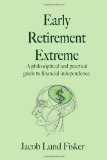
Jacob retired in his early 30s. He had saved drastic - almost draconian - amounts of his salary in his twenties and thirties by living an exceptionally minimalistic lifestyle, although he argues that he didn’t do anything truly exceptional - he simply avoided the temptations of consumerism and was attentive to the use of his resources. One of the things that struck me reading his book was that he lays out a vision for life that’s predicated on the idea that none of us really need any “things.” That’s an exaggeration: we need clothes, and some utensils, and shelter, and maybe a few semi-extras like computers and high-speed internet; but by and large most of the things we think of as ‘must haves’ are not. If you have a neighbor with a shovel, and you have a hammer, the two of you can share; you don’t both need a shovel and a hammer. We don’t need martini glasses and winter/summer tablecloths, or multiple sets of dress belts.

Maybe much of this is obvious to people who live a minimalistic lifestyle, and maybe much of this is insane to those who live the standard suburban lifestyle. I don’t think Jacob’s writing to convert anyone, to be honest. He seems to be trying to convince readers of his plan, but I don’t think you could come to this book treasuring your Lexus and enjoying your lattes and Netflix and occasional trips to TGI Friday’s and have the right mental mindset to absorb what he’s talking about. You have to be halfway there already. If you’re already thinking about an endgame - financial independence - then what he’s talking about will open up a lot of new ideas for you. The idea of extreme minimalism, of community sharing, of making maximum utility of the resources you have at your disposal will all seem quite simple and yet have a “why didn’t I think of that before” feeling.

I’m not sure this plan is for everyone. As someone who’s further down the suburban white picket fence/4 bedroom/2.3 kids model than I’d ever thought I’d be, I’d say that the transition from an air-conditioned, cable-supplied house like ours to an early retirement extreme existence would be exceptionally difficult. But the important thing about books like ERE is that they point out that difficult does not, by any means, imply impossible. You can minimize your expenses. You can make the goal of your life independence, not wage slavedom. You can do these things - others have and you can, too.

So while I can’t recommend ERE to everyone - it’s technical, it’s unforgiving and it’s hard - if you want to learn something new about personal finance and frugality and minimalism and environmentalism, you have to read this book. I haven’t read many personal finance books that have deeply affected my thinking about money and the role it plays in my life. One is Rich Dad, Poor Dad. Another is The Millionaire Next Door. And Early Retirement Extreme will sit alongside those books, too. Not so much because it’s a guideline, but because it’s a philosophical work that deserves to sit in the back of your mind all the time; every time you buy something you should have this formula ringing in the back your mind. You won’t read many books like this, to be honest, but that’s exactly the reason you should read this one. I’d imagine if you read this blog, you’re probably the type of person who would enjoy Early Retirement Extreme; so buy a copy through amazon or visit your local library and request a copy.

what are the most literate cities in America?

All of us have some built-in assumptions about parts of America. New Yorkers are liberal, Mississippians are conservative, people in Kentucky and North Carolina love basketball and Texans are football-crazy. But here’s one you might not have considered before: what cities READ the most?

Well, the data’s incomplete, to say the least, but Amazon put out some data recently that sheds a little bit of light on that question (at least in terms of Amazon readers; I got this data via Mashable). Amazon took their records for all book, magazine and newspaper sales in print and Kindle formats since the beginning of 2011 on a per capita basis in cities with more than 100,000 residents. The results?

  1. Cambridge, Massachusetts
  2. Alexandria, Virginia
  3. Berkeley, California
  4. Ann Arbor, Michigan
  5. Boulder, Colorado
  6. Miami, Florida
  7. Salt Lake City, Utah
  8. Gainesville, Florida
  9. Seattle, Washington
  10. Arlington, Virginia
  11. Knoxville, Tennessee
  12. Orlando, Florida
  13. Pittsburgh, Pennsylvania
  14. Washington, DC
  15. Bellevue, Washington
  16. Columbia, South Carolina
  17. St. Louis, Missouri
  18. Cincinnati, Ohio
  19. Portland, Oregon
  20. Atlanta, Georgia

First of all, I could have made a lot of jokes about which states aren’t included; but I won’t. Second of all, I know that per-capita-buying doesn’t equal quality or actual reading, just buying. But other than that, a few observations: university towns predominate, of course, and I wonder if some of the numbers are falsely inflated by students buying mandatory reading for courses. And this does include magazine and newspaper reading, which in my mind is an entirely different category of ‘reading’ - and I lump my blog in with that category, by the way. Long-form books are a lot different than reading Cosmopolitan, or even more cerebral fare like Sky & Telescope.

I’m glad to see two Florida cities make it on the list (and two Virginia cities in the area where I have a lot of relatives).I’m surprised that a couple of other places didn’t make the list, although I suppose there might be population size issues: for example, Austin, Texas, which I would have supposed would have a huge per capita online-book-ordering number; but maybe it’s “post-book” there and everyone’s just reading blogs and Twitter on iPads.

It would be even more fascinating to compare these to library numbers and other booksellers’ numbers. But overall, I’d expect most of these cities to remain on the list, simply because of large academic presences, probably significantly larger than other cities (New York has a lot of universities, but as a percentage of the total population I’m sure it’s quite small). Orlando, for example, has one of the biggest universities in America that you may never have heard of, the University of Central Florida.

I’d also make the observation that my reading rate has soared since getting a Kindle. Once you realize you can read free books (from Amazon as special deals, from Project Gutenberg and other sources) you really have no excuse not to be reading all the time. I still go to the library sometimes with the kids, but with a 3G Kindle I can literally have a free book in my hands in seconds if I want it. And once in a while - rarely - I’ll buy a book on sale. I generally don’t see the point of a full-price book - for that I’ll head to the library. But I wonder how much the Kindle and Nook and so on have affected reading patterns for the good (I don’t include the iPad - I suspect there’s a lot more game-playing and web-browsing going on with that thing than book-reading). So people in places I might’ve expected to be on this list (Champaign-Urbana! Charlotte! San Francisco!) let’s pick up the pace and see you on this list next year! Get a Kindle!

Quick note, too: I’ve added a plugin to brip blap which should make it far, far easier to read on your smart phone, no matter what kind you have. Try browsing to bripblap.com on your mobile and let me know how you like it!

Photo credit Some rights reserved by Terry Madeley:

near death

Last Monday I was feeling fine in the morning. I had my lunch, which I had brought from home. Nothing unusual - grilled chicken breast sandwich, carrots, chips and an apple plus some seltzer to drink. Shortly after I ate, I started to feel weird. My lips started swelling up and my throat got constricted.

I went back to work and kept on working, assuming it was just something minor that would go away. I felt worse and worse and then started to feel very, very hot even though my skin temperature was getting very cold. My blood pressure started rising and my pulse got very very fast. But I stayed at work and assumed it would pass. And it lessened slightly, so although I was uncomfortable I decided to grit my teeth and push on through.

That evening I went home and by the time I arrived home I was feeling - to put it mildly - awful. I checked my blood pressure and it had gone up to approximately 200 over 110, which is the point at which organ damage starts occurring. I took a leftover blood pressure pill (I have not taken them in months, and after my physical last week my doctor said it wasn’t necessary anymore). This was at 7 pm. We left Little Buddy and Pumpkin with our neighbors, who are good friends.

Bubelah and I went to the emergency room where they continued to monitor my blood pressure. I then saw a nurse and a doctor who told (lectured) me on the following: I had had a severe, near-fatal anaphylactic shock and failing to treat it immediately I had actually defied the odds in living long enough to get to the emergency room. Apparently my body managed to fight off the allergic attack at the cost of nearly giving me a heart attack/stroke. They said someone with a similar level of shock had died earlier that week at the hospital of strangulation. They were emphatic that the level of shock I had experienced was usually fatal. I was ordered to keep Benadryl accessible 24/7 and if similar symptoms started again to drop everything and get to an emergency room as fast as possible. They monitored me until my blood pressure was back down in the 130s/80s which was normal. They released me around 10:30 and we went home, got the kids, and went to sleep.

So I’m in the dark as to what happened. Nothing I ate was unusual - I had eaten everything there before. The nurse told me I may have developed a new allergy - or somehow a peanut-related product had contaminated a container or something. I have to assume that my peanut allergy is far more severe than I had assumed, OR I have some strange new allergy which can’t be determined without a visit to an allergist. Today I felt more or less recovered, although tired and sore all over from tense muscles, swollen lips and throat and a beaten-up psyche.

I’ve read a million articles, seen dozens of movies, read dozens of books, etc. where someone has a near-death experience or survives cancer or otherwise cheats death and goes on to tell everyone that they “cherish every day.” I’ve understood the idea while realizing you can’t ever really have that perspective until you’ve undergone some experience like that (or if you can, you have a great deal more emotional discipline than I do). But I did realize, after being told how serious it was, that my last day on earth COULD have been leaving the house snapping at Little Buddy to calm down. And I’m sure I will again, of course. But you do get a tiny bit of perspective when you realize you could have dropped dead at a desk at a client at 2:00 pm on a Monday and that would’ve been it for your life story. Not a pretty thought, and although it didn’t prompt me to quit work or take some other drastic action, it does give me some food for thought. If you died today, would you be happy with your obituary? I wouldn’t hate mine, but I suspect I’d feel better with it being a little bit better and a whole lot longer.

photo Some rights reserved by markhillary

5 Time Management Quotes by Brian Tracy

Time management skills are essential for anyone who wants to breed success. How you manage your time will determine how fast you will succeed in your endeavor. Brian Tracy, author of books on time management and personal productivity, says one of the differences between successful people and average people is how they manage and value their time. After reading many of his books I’ve gathered five of his best quotes on time management.

1. “If you have two frogs, eat the ugliest one first.”

Eating a frog is an analogy of doing your most important tasks first thing you wake up. Brian Tracy got it from the saying: If the first thing you do each morning is to eat a live frog, you can go through the day with the satisfaction of knowing that that is probably the worst thing that is going to happen to you all day long! By doing your most important task first you will less likely procrastinate on the other tasks later in the day. By getting the biggest task done first you also set the tone for the rest of the day for getting work done.

2. “One of the most important rules of personal effectiveness is the 10/90 rule.”

The first 10% of time that you spend planning and organizing your work before you begin will save you as much as 90% of the time in getting the job done once you get started. This is not to be confused with the 80/20 rule which is about determining your most valuable tasks. The 10/90 rule is about planning when and how you do your work. Without a game plan of how you are going to tackle the tasks at hand or not even knowing when you will do it will make you more likely to procrastinate. Whenever you start a new task or project, think about the 10/90 rule. Plan first, then start.

3. “The fact is that you can’t do everything that you have to do. You have to procrastinate on something. Therefore, procrastinate on small tasks.”

Let’s be realistic here; everyone procrastinates. If you have to do it, you might as well creatively procrastinate on things that aren’t as important. It’s a good idea to make a separate list of tasks that are not important but have to get done at some point. For example, organizing your bookshelf or cleaning out your closet are not really important but have to get done at some point. Whenever you feel like procrastinating, look over this list and see what you can knock off without much effort. You still get work done even when you feel like you are procrastinating.

4. “There is never enough time to do everything, but there is always enough time to do the most important thing.”

Brian Tracy also calls this the “law of forced efficiency”. Today we are overwhelmed with information and things we need to do. You often hear people say “I wish I had more time” when they feel overwhelmed. What he is saying is that if the task is really important, you will get creative and find time for it to finish. Sure, you might really have too many things to do but that is not the core problem. Instead, you want to ask yourself “what is the most valuable use of my time, right now?” and work on that right away. Anything else in comparison is relatively unimportant.

5. “The purpose of time management and getting more done in less time is to enable you to spend more face time with the people you care about and doing the things that give you the greatest amount of joy in life.”

The three biggest factors for determining your happiness are your health, wealth and relationships. With the right time management skills you can free up time so you can not only feel happier but also you can actively spend time on doing things that make you feel happier. Relationships with friends, family and your significant other are important for feeling happy so make sure you spend time with them.

Thanh Pham is a productivity nerd and he writes on his blog about time management and productivity.

1 2 3 4 5 13