Category Archives: money

can financial behavior change

andrew_jackson


Have you ever bought a lottery ticket? Have you ever used a coupon? Have you ever incurred non-mortgage debt? If you haven’t ever, will you ever, just to try it? Just to see where it takes you?

I have some financial behavior that is set in stone. You do, too, I bet. Me? I hate debt of any sort. I can’t stand seeing money spent on “fancy” cars, even though I’ve owned several nice new mid-range cars. On the other hand, I am careless about spending money on eating out. I can spend money on big-ticket items if I think they benefit health or quality of living, but I agonize over spending smaller amounts on items I might not “need” – think “new shoes”, for example.

Most behavior is learned. Some is not. I know where I got the idea that money spent on “going out” was money well spent. I know where I got the idea that any money spent on books was money well spent, too. I also know why I think ANY debt is awful, and why I get antsy about buying expensive (but hopefully good quality clothes). Most of these behaviors were learned at a young age, and they fit in with the world view I developed as an adolescent and voila – now these money behaviors are part of what define me.

I often wonder if I will ever apply for a $300,000 small business loan, or splash out on a BMW. It’s easier to imagine the loan than the car, I guess. I drive an almost 10-year-old Pontiac because I just don’t care about cars. It has an air conditioner and a CD player, and it makes – for an old car – acceptable mileage. The loan? If I was suddenly struck by inspiration to start a coffee shop or a hardware store or something like that, maybe… but it would be so out of my normal financial behavior that even writing that seems odd to me.

Without being too specific, I spent some time a few days ago listening to a radio show from a political commentator whose political views were 180 degrees from my own. I was stunned by what I perceived as the commentator’s completely insane view of reality. Imagine trying to listen to someone try to convince you that the sky is pink. I wondered whether there was some truth in what he said, and whether I could ever pull some of that truth out and live with it. I doubt I could, in the same way that I can’t imagine suddenly strolling into an Audi dealership, ready to buy. Some behaviors and thought patterns are hard to change – for better or for worse.

Some rights reserved by _J_D_R_

black friday death

I’m sure I won’t be the only person to mention this event during the weekend, but I was shocked and saddened to see reports of a death in Long Island at a Wal-Mart Black Friday event.

I’m sure others will use this incident to speak about the evils of capitalism and the pitfalls of greed, but after I found out that this was a Wal-Mart worker, not an overanxious shopper, I simply felt sad. Imagining some poor guy - in his early 30s - showing up in the wee hours of the morning to earn a little seasonal pay and dying because he was slammed to the floor by people anxious to get a cheap plasma TV or xbox is just sad. Sad. I hope everyone who thought it was fun to crash through the doors early in the morning to get cheap consumer goods sleeps well tonight. Some things in our society have just gotten out of hand. Let’s take a step back: crashing through a discount store’s doors at 5 am to get cheap consumer electronics does not need to be a death sport.

selling on eBay for passive income

blue bracelet

Selling on eBay is definitely not ‘passive income.‘ My wife and I had a store for several years. We had a friend whose brother lived in Turkey and was able to buy huge amounts of trinkets (jewelry, bracelets, etc.) at wholesale from a Turkish factory, ship it to us and then we’d resell it at a fairly large markup (our price $1, sell for $7 for example).

It was a good deal at first, and some of the items - surprisingly things like religious icons - sold very well. But it was a HUGE amount of work to deal with the posting, packing, shipping, dealing with “special orders” and so on. We tracked time spent on it for a while and finally realized - after our Turkish connection got greedy after seeing our resale prices and raised his - we were making pennies per hour, especially considering eBay’s never-ending price hikes.

Unless you can sell a very small variety of inventory (i.e. eliminating the need to take photos and write up new descriptions) and you can get the items with a minimal amount of effort or get items that have fantastic mark-up potential, I don’t think you can make much selling online. My uncle (who unknowingly is a “retired” ERE guy) goes around to yardsales and identifies items people have that he KNOWS are rare, or valuable but the sellers don’t. He sells them on eBay with huge markups, so it’s worth it for him. But he’s spent years and years perfecting his knowledge of kitschy valuables (like in Antique Roadshow).

I’ll tell you how to make some money selling on the internet - write and aggressively sell an ebook (pdf or whatever) called “How to Make Money on the Internet.” Lifestyle design bloggers are all about this - they’ll sell you a book and tell you it’s the way to get your life right-sized. Those bloggers create a single product and then resell it endlessly. That’s the only product that I personally ever would sell on the internet as a way of making income again (rather than just disposing of something I don’t need but wanting to make some money off the disposal). I say this cynically - you can, of course, sell meaningful and helpful ebooks, but you are, in the end, selling it to make money for yourself.

these are the reasons why I spend

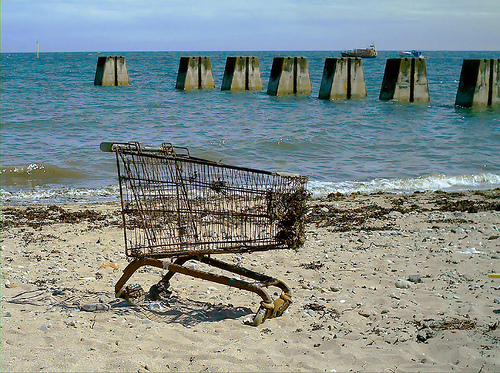
Trolley

I forget, occasionally, why I care so much about money. I know that the easy answers are “I do it for my children” or “I do it for financial freedom” or even - if we’re honest with ourselves - “I do it for stuff.” In the western world, in America in particular, it’s hard to forget money for a minute.

But money can’t be the reason for life. Money’s just a symbol for other things. It’s the placeholder for a vacation, or a college education, or payments on a medical bill. Trying to pretend it represents status or security or happiness is a false choice. It means nothing other than a temporary victory against time.

If you had all the time in the world to work, you’d have all the time in the world to earn what you needed to get what you want. You use money to bridge the gap between your lack of time and your desires. I’d like to have enough time to earn enough money to obtain everything I want in terms of material goods - without working too hard in the meantime to acquire it.

Every iPod, every plasma TV, every air conditioned car and every creature comfort represents a few seconds or minutes or hours (or more) of your life that you traded for things. Some things are necessary - I like having a refrigerator, for example. But I regret my mortar and pestle. A few minutes of my life were spent earning the money I exchanged for something useless.

I‘m sure you’ve read plenty of screeds against materialism on the web. Books like Your Money or Your Life hammer this point home. I talked about Early Retirement Extreme - a good primer for another way of thinking. But why do we do it? We do it because, no matter what anyone says, spending our measure of days on Earth is not as pleasurable without things or experiences. Without that dinner on the bay in Barcelona, or the air conditioned car, or the gleaming black tux at New Year’s life would be a little less. We can do without a lot, but not without everything.

Nobody needs an Xbox, or jewelry, or new books… but these things make the days a little better and a little brighter. We can all determine what price these things are worth, but I’m tired of the idea that any glimmer of consumption in the pursuit of happiness is a flaw in one’s character. All of us can look around and see someone who lived a shorter life than they hoped for, and wonder why they saved or delayed living a little fuller life. Nobody should be wasteful or spendthrift, but trade your time for money wisely. Financial freedom is a worthy goal, but a life fully lived - which may mean some money spent - is also an end to be admired.

photo credit: macieklew

cutting the cord

cable cord

cable cord

Back in the early 80s my brother and I wanted to get a dog. Badly. We also lived in an area where TV reception was spotty (at best) and if we wanted to watch Star Trek reruns we had to go outside and spin the big aerial antenna around to pick up ABC. How are these two items related?

My parents weren’t “pet people”. I am sure they never had any intention whatsoever of letting us get that dog. But what they did know was that in early 80s America a new pop sensation - a music television channel! - was sweeping America. And for two early-teens boys, getting cable in order to get MTV was a priority.

Maybe you can see where this is going: we were given the choice between cable and a dog, and chose cable. That began a decades-long relationship between cable TV and me. Briefly I had satellite TV (once in Moscow, and once in New Jersey) but a cable always piped in a signal from somewhere into the house.

But a couple of years ago we got a Roku device, which completely changed how we watch TV. We started watching movies, at first, and then noticed that good, solid educational programs from PBS, Nick Jr., etc. were also available. Bubelah watched Russian TV and movies on a laptop, and my sports intake dropped dramatically with two busy little toddlers. I didn’t want to spend one of two weekend days glued to the TV throughout the fall and winter watching the NFL, especially since I’m a Jets fan and they don’t get shown much in this Jacksonville market (we get Bucs, Jags and Falcons).

So we finally dropped cable TV. We kept the high-speed internet. And we even dropped our VOIP “landline” in favor of our mobile phones and Skype. Now, we aren’t getting rid of the medium altogether. I’m not one of those people who is ready to quit watching the idiot box altogether - I do enjoy movies. I think some television is good for children, because they will get exposed to it one way or the other. And some shows and movies do teach, albeit only a little bit.

We’ll still have access to broadcast channels, but other than PBS I doubt we’ll ever watch them. I’ll probably tune in to an occasional football game, but if there’s an NFL lockout (as seems likely now) my sports viewing will drop to almost nothing. We’ll still let the kids watch their favorite shows, and we’ll still catch Anthony Bourdain on Netflix once in a while.

So who knows how I’ll feel about this move in a few months, but saving $70 a month for something we didn’t use much and really only used for mindless viewing (”hey, let’s watch Bad Boys II for the nth time!” or “look, House Hunters International is in El Salvador!”) doesn’t seem like a bad idea. Plus, I changed my car’s oil by myself this weekend - reading Early Retirement Extreme must have had some kind of effect on me.

Photo Some rights reserved by Andrew Mason

what if no one was watching

Although I’ve lived in three different countries and worked for long periods of time in dozens of others, I had never spent a lot of time around young children (other than my own, of course, in the last five years). I certainly never paid much attention to child development or early education. I’ve read here and there about child development in different countries, and parenting theories, but I did most of that reading early on in parenthood, and now I don’t care as much - I simply try to do the best I can within the narrow set of philosophies that Bubelah and I have adopted and treat as gospel (the importance of play as taught by Waldorf schools, promoting reading and storytelling, and a very low-pressure approach to achievement, i.e. letting them find their own pace). But I don’t have a good understanding of how other people in my community raise their kids, let alone how parents in other cultures in the US or in foreign countries do it.

One of the aspects of our Western - particularly American - society that troubles me is the community ideal that focuses on what people “are” in terms of their work. Children are asked “what do you want to be when you grow up?” by well-intentioned adults as if the goal of life is to find a profession. Nobody ever asks kids what they want to be when they grow up with the expectation of hearing “happy” or “curious” or “living near a beach.” Schools promote the idea of education as a “path” leading to the mythical job-guaranteeing “college” and then to a “secure” job with a multi-national corporation offering sick-care benefits and a carefully directed “retirement plan” in which the company forces you to save your money in funds they selected while they squeezed you over forty years for ever more time and ever less money.

Two thoughts: first, my quotation marks key is starting to creak, and second, this current model of life in modern Western society is going to be unpleasant to the great majority of people. Many people may not recognize it as unpleasant, and will pay great attention to attending University X and getting a job with Megacorp Inc. all the while going home to sit in front of their 52″ widescreen and watch people who - if nothing else - are actually pursuing their dreams in the 21st century version of gladiator combat, American Idol. And that’s something that bothers me increasingly. I hate the stupidity of shows like American Idol (which I have never seen - I’m judging based on commercials) but I’d rather see my daughter singing “classic” songs from Toni Braxton on American Idol than hunched over a keyboard on the 3rd floor of a 5 floor office park building with the gentle flickering of fluourescent lights above her. I’d rather see my son working as a park ranger than trudging back and forth to a job he hates so he can afford “necessities” like a gym membership and a subscription to The Economist.

I don’t meant to rant. I just wonder how much of what we “do” - meaning our work, not what we REALLY do - is driven by the idea that someone is watching us. There are expectations everywhere: not to let down parents, relatives, friends, our schools, our community, our spouses, our children and even ourselves. But why would anything be a “let down”? I think that often the let down is solely internal. I have no doubt that if I was able to maintain a reasonable lifestyle - meaning healthy food, a home, health insurance, clothing, etc. - I could do whatever I wanted without disappointing anyone. If I switched tomorrow to being a sanitation worker/blogger, would that “let down” anyone? It might disappoint the self-constructed mental image I have of myself, that society has contributed to, as an “educated” person who shouldn’t do manual labor. But what would I do if no-one was watching? What would you do? I would argue that based on the large amount of pharmaceuticals and their heavy dosage of reality TV in America that many people are attempting to medicate themselves and their brains into not pursuing this mental line of questioning. I’ve certainly been guilty of that myself (although I substitute movies for reality TV).

If I am honest with myself, I’d agree with an offhanded comment made by the comedian Bill Burr on (I think) Doug Benson’s podcast. He said nobody is sitting in a cubicle working on spreadsheets because they dreamed of it as a child. Nobody’s getting “filled up” by that work. And life’s a compromise, in many ways. Many people are happy to exchange their time for money so they can buy an iPad or a Roku. I’m fully engaged in that compromise as things stand today. Maybe I still will be in five years. And maybe the goal of children in this world is to live like characters in “Defending Your Life” (one of the best movies I’ve ever seen, watch it if you haven’t seen it). Parents do the best they can to provide a sturdy, well-built diving board for their children to leap off of, but once kids hit the water they have to swim. The trick will be to learn to swim without fear, using whatever stroke is best for them, and not to worry that anyone is watching that they do it the “right way.”

Airline Mile Credit Cards

Airline flights, hotel stays, rental car purchases – all of these things are better when they’re free! Learn the secrets to getting these free perks from your favorite airline, or from your card company…

The frequent flyers among us know the secret – those points we earn are worth their weight in… well, miles. Whether you travel for business or pleasure, if you’re going to fly, you might as well take advantage of the perks that the airlines offer us. And if you’re someone who uses their credit card often, why not earn miles for that too? It’s amazing just how quickly the money that you were going to spend anyway, can earn you a free flight. But just because all of the airlines offer credit cards that accrue points, not all of these programs are equal. Some things to look for when evaluating a credit card that earns frequent flyer or mileage points:

Most airline mile credit cards are only good for flights on that airline. In addition, they often have restrictions on when you can fly.

Many airlines have affiliate programs that allow you to also use your points for hotel and rental car purchases, so check before you sign up for one. Usually the cards offered by the airlines charge an annual fee of between $35 and $150, or more. Also, since the cards are not issued by the airlines themselves, but rather by a credit card company, be sure to check the issuer’s own fees and penalty structure. Different airlines reward purchases differently, and some are more generous than others. Be sure to check around for the best plan that meets your needs.

An alternative to a card issued by a specific airline is what’s called a travel rewards card. Most credit card companies offer some type of travel reward or points program. The way these programs are structured can offer a little more flexibility than an airline credit card program. For one thing, the points can generally be used toward flights on any airline. For another, they typically accrue more points for purchases. Also, these credit company rewards cards usually don’t expire the way miles with an airline can.

As with all credit card offers, be sure to read the fine print in the card agreement. Many of the reward programs – whether sponsored by an airline or a credit card company – can quickly turn into a money-vacuum if you’re not careful. Be sure to pay off the money you charge as quickly as you can, to avoid what are usually some pretty hefty interest rates. Also, always pay your bill on time, if you don’t want fees and penalties to eat into your hard-earned miles. Finally, take advantage of the double- and triple-mile rewards that your card offers, as these can really help you to rack up the points and get you into the air sooner than you think.

Finally, don’t get so enthralled with the idea of earning points and miles that you end up making purchases that you don’t need and will never use. Just because a purchase earns you miles for every dollar, doesn’t make it a good deal. On the other hand, if it is a purchase that you would normally make anyway, and a partnering vendor is offering triple reward miles – in that case it may make sense to take advantage of a good thing. Bottom line; be smart and you’ll be rewarded – in free travel!

Today’s guest post comes courtesy of Compare Cards.

Highly Effective Ways To Pay Down Credit Card Debt

lolcat credit card

If you have run up your credit card bills and wonder how you are going to catch up and pay them off, you are not alone. Millions of Americans are in way over their head when it comes to credit card debt. The good news is, it’s not impossible to pay off credit card debt, even though it may seem like it right now. With discipline, you can become debt free and use the experience to improve your long term financial situation. Paying off debt does take sacrifice, determination and hard work - there are no easy fixes. Here are some of the most highly effective ways you can eliminate your credit card debt quickly and get yourself back on track financially:

You Really Can Give Up Cable TV

Sacrificing cable TV is not something people really want to do - but if you have a pile of credit card bills that you want to pay off quickly, this is a great way to get started. Cable bills can run into the hundreds of dollars per month, so if you temporarily give up cable television or at least reduce your subscription cost you can put that extra $100 or so toward your credit card debt. If you’re worried about missing some of your favorite shows, check out the network websites - many of the shows you watch are probably available online. If you’re just a little bit technical, you can even connect your computer and tv and even watch your shows on your television instead of your computer monitor.

Giving up cable television is a bit of a lifestyle change for many families, but think about how that extra $100 or so per month will speed up your debt repayments.

Consolidate Your Phone Lines

Most families have multiple cellular phones and a phone line or two installed in their homes. Do you really need all of them? Cell phones have become part of our world and most of us can’t imagine life without them but believe it or not - people survived without them just fine a few years ago! If you really can’t give up the convenience of your cell phone, consider downgrading your plan, texting less, skipping the data plan and using the phone for communication only to reduce your monthly cell phone bill. You can also consider whether you really need the home telephone line if you have your cell phone available all the time - it may be less expensive to upgrade the cell phone plan to an unlimited plan and cancel your home phone. Look at the different scenarios for your phone bills and find the option that will save you the most money and still meet your needs for communication. Apply the savings to your debt repayments.

Think About Trading In Your Car

For people who are in over their heads in debt or are just serious about changing their ways, trading in your car may be an option. The American way is to have a new shiny car every few years, but the result is generally a car payment that never ends. When we finish paying off one car loan or lease, we turn the car in for a new one and start our payments all over again. You may consider turning your car in for a less expensive, reliable used car that has a lower monthly payment or better yet - one you can pay for in full. If you do this, make sure you apply the full amount that you used to send to your car payment to your debt.

Cook Your Meals From Scratch

You might be in sheer panic with this one, but home cooking does not have to take hours of your time and it can save you a small fortune over eating out or buying prepared meals each month. Also, eliminating unnecessary items like junk food and soda or other beverages can really help reduce your grocery expenses each month. The money you save on food can be applied to your debt to pay it off faster, and once paid off you can decide to return to your favorite foods - but you may find the side effect of this sacrifice is living a healthier lifestyle!

Stop Shopping

Except for necessities like groceries and items your kids absolutely need, take a break from shopping. This means no unnecessary spending for several months at a time. Most of what we buy we don’t need anyway, and if you want to tackle debt, not spending is a great way to have the money to do so. You would be surprised at how much money is wasted each month on items we forget we buy. If you don’t believe me, keep a 90 day record of every penny coming in and every penny you spend, and then look at where the money is going. At the end of 90 days, add up everything on the list that isn’t essential, even the pack of gum or cups of coffee, and see just how much you spend without realizing it! Most people find this to be a very eye opening experience.

Radically changing your spending habits is not easy to do, but your debt can take years longer to pay off without making these lifestyle changes. You don’t have to give up these little luxuries forever - just make temporary sacrifices to free up money so you can pay off debt and stop paying interest and fees. Once you’re out of debt, you can better decide how to spend your money. Chances are good if you commit to these changes until your debt is paid off, you’ll learn strong money management skills that will ensure you don’t make the same mistakes again. Jump in with both feet and give it a month or two. You may find out that you actually enjoy the lifestyle changes and you certainly will feel less stressed as your debt begins to disappear.

Jennifer Davis blogs about reducing credit card debt with balance transfer credit cards at SmartBalanceTransfers.com, a consumer education website designed to help people find 0% APR balance transfer deals.


Photo: Some rights reserved by Tony Webster

The Best Time to Buy a Car

Guest Post By Edward Pacheco

Portrait of Boxleys new car

When buying a new car the main goal for most people is to get the most vehicle for the lowest price. There is nothing better than walking out of the dealership knowing that you got the best of them. Many people do not realize it but there are times when you can get a lower price simply by going car shopping at the right time. In general, it is a somewhat known fact but that there are a few certain times of the year when dealerships are under pressure to move inventory. It is during these certain times that will do whatever they can to sell vehicles.

The end of the calendar year is one of the best times to buy a car. The day after Thanksgiving and the day after Christmas are thought to be the best two dates to buy a car. Though you can realize significant savings throughout the months of November and December in general, the largest discounts will be available these two days. The car dealerships know people are in a buying mood these two months, and actually they are able to sell a higher volume during this period which in turn allows them to offer a few at a lower price without feeling bad. Also, dealers are typically anticipating the slowdown of sales that occur in the months of January and February. These two months are usually slow regarding sales because people tend to have less excess money to spend after the holidays. By moving a lot of inventory in November and December they can compensate for the slowdown in January and February, and might just give you the deal you’re looking for.

The end of the model year of a certain car is also a great time to buy a new car if you don’t mind giving up on buying the “newest.” It should be noted that the end of the model year does not always coincide with the end of the calendar year. In fact, the end of the model year usually occurs somewhere in the middle of the calendar year. During this time, the dealerships want to get rid of the old models to clear room for the new models. This creates a sense of urgency that makes the dealerships slash the prices on the older models. Many times, especially on popular models, the older ones can sometimes be had at the price that the dealership paid for the car. The dealers need room to provide a prominent position for all the new models, and it’s worth it for them to get rid of the old ones. My neighbor recently purchased a new Mercedes (2009 E350) for $12,000 off the original price since the new 2010 (new design) Mercedes came in.

The end of the month is also a good time to buy a new car regardless of where the month falls on the calendar. Car salesmen have a monthly quota that they must meet. To that end, they will be interested in moving as many cars as they have to at the end of the month in order to meet that quota even if they don’t make money—some may be depending on the quote to keep their job. The pressure is on them to make sales so it is easier to work out a better deal. One other thing, be sure to check any available rebates or incentives on the models you’re looking at, you may be in for a treat.

The nice thing about car shopping today is that you have so much information available to you. It is possible to go online and find all the information you want very easily on all of the models you are thinking of buying. When you’re a knowledgeable buyer, you will be equipped to haggle with the salesman since you know how much the car is worth, and how much others are asking for it. The easiest method: Request several free price quotes from various dealerships online (you fill out a few questions about the type, make and model of car you want they will send you back a price quote). Then you use this to your advantage. If you want to contact all the local dealerships in your area in one step and have them fight over your business, consider researching at InternetAutoguide.com and using the “Get Real Dealer Pricing” option for whichever car you’re interested in!

Income Tax Preparation Software

Most adults have at some point in their life either prepared their own income tax return, or contemplated doing so. Income tax software programs have become increasingly easy to use while at the same time becoming more sophisticated. Accuracy has improved tremendously from what it used to be, due in part to simplified user instructions. There are two methods of entering the data:

  • In the interview method, the program asks questions, the user enters the answers and the program completes the form.
  • In the form method, the user enters their information directly onto the form or a field or worksheet attached to the form.

Both methods work equally well; the interview method is probably easiest for those new to tax preparation. For the individual contemplating their own income tax preparation, the following five are popular options.

H&R Block At Home
H&R Block at home, which was formerly TaxCut, offers a variety of tax preparation software choices, from their very basic program to their premium & business program, which is for small business owners and includes corporate and partnership returns, as well as non-profits, estates and trusts. A free, downloadable one-state tax preparation module is included in all the Block programs, but e-filing the state return costs additional except for the premium & business program.


H&R Block At Home Online
H&R Block also offers a best-of-both program that enables the individual to prepare their tax return online at the Block website, then send it to a local office for one of their tax professionals to review; one free session of tax advice is included. In addition, this program is available with their worry-free audit support, which guarantees that in the event of an audit, they will provide an enrolled agent to represent the taxpayer.

Turbo Tax
TurboTax is another popular income tax preparation software program with four levels of tax preparation, and a five-star rating, slightly higher than the H&R Block program. The basic TurboTax program is free for federal preparation and filing, although there is a charge for e-filing the state return. For those with simple returns, this is a good option and includes common forms such as Making Work Pay, Child & Dependent Care Expenses and Education Credits.

TurboTax’s three upgrades include free federal e-file but charge additional for state e-filing. The upgrades to TurboTax cover standard deductions for those who itemize and forms for business owners, those with rental properties, stocks, bonds and mutual funds, etc. All TurboTax tax preparation programs start for free, with payment due at completion of the return.

TaxAct
TaxAct income tax preparation software has an average four-star rating and their four levels are the lowest priced programs available. The free edition has free e-filing for the federal return; both federal and state start for fee in the deluxe edition, with payment being made when the return is filed. The small business edition has state modules integrated into the program and includes free e-file for both federal and state returns. TaxAct conveniently has a bundling option that allows a customized combination of their upgraded software programs.

IRS
For taxpayers with a 2010 adjusted gross income (AGI) of $58,000 or less, the Internal Revenue Service offers free tax preparation software at their website. The program is courtesy of the Free File Alliance, which is a collaboration of industry leaders in tax preparation software. Users select the free file option, then select from a list of companies that fit their needs, or there is an option to help the taxpayer locate an appropriate company.

For the taxpayer who wants to prepare their own income taxes, there are a multitude of available options that will simplify what is without doubt a daunting and arduous task. However, it can be done and for less money than a tax professional would charge.


the color of moneyblogging

I’m not nearly as prolific in my writing as I used to be. I started out blogging in 2007, usually putting one sizable post up per day, sometimes more. I guest posted, I participated actively in forums and had a real passion for both the business and art of blogging. I was enthusiastic and enjoyed what I was doing.I’m not nearly as prolific in my writing as I used to be. I started out blogging in 2007, usually putting one sizable post up per day, sometimes more. I guest posted, I participated actively in forums and had a real passion for both the business and art of blogging. I was enthusiastic and enjoyed what I was doing.

I have no doubt if you’re reading here that you’ve heard or read all the same “follow your passion” credos out there that I have. The idea is that you should find something you like to do, and do it - success will follow. The only way you’ll fail is if you can’t apply yourself 110% to whatever endeavor you choose to do.

It’s clear to me that while this is partially true, there is a small gray area between following your passion and the opposite idea: simply find something you can do that’s lucrative enough and do that. I like to kid myself that I’m a decent writer; not great, but I feel that I have a grasp of the language and an understanding of how to write a compelling narrative. You tell me. At one point I had a passion for the craft of writing, and it’s faded away. You know why? It’s not so much that I don’t like writing, I just started to feel that writing brip blap was a job - that I should be targeting keywords, writing to subjects I didn’t care about and putting myself in a crummy position: doing something I had a passion for but in the process of doing it, killing that passion.

So what do you do in my shoes? I’ve read enough blogs that focus on monetization (through ads, affiliate links and other forms of advertising) to know that it’s both possible to find money while producing original (albeit dry) content. I’ve also read enough blogs that DON’T focus on monetization to know that you can have a deeply fascinating blog if you simply choose to write directly to an audience about a subject you care about without worrying about the money.

Where you fail in those models, I think, is if you approach blogging or writing in a half-hearted manner. If Seth Godin and his famously short, no-comment, no ads (discounting ads for his own books) blog suddenly slapped a pop-up ad for lawnmowers in your face, it wouldn’t work. And if ad-driven, highly monetized blogs suddenly expected you to start reading/following/sharing their articles about credit cards as if they were inspirational tracts, they’d have a while to wait before anyone did so, if they ever did.

I’ve approached brip blap in that kind of a half-hearted manner. I’ve got a blog that focuses on a wide variety of topics near and dear to me - weight loss, personal finance, happiness, family and career. These are disparate subjects and it’s hard to find a theme. I have an internal idea of a theme: me. More broadly, though, I set out to write the blog to be helpful. I think some of it has been - I’ve gotten lots of positive feedback on my 101 thoughts on losing 100 pounds, my 8 steps to a six figure career and other posts. That’s the part where I think I’ve been most successful.

Where I haven’t been successful, though, is in advertising. I’ve had more luck than most bloggers, I’m sure - I make more than enough to cover the cost of blogging and have a bit left over for themes or other ‘blog extras.’ But it’s also clear to me that I’m not headed in a direction where brip blap is going to support me or my family. The reason is that I’m not writing the kind of easily monetizable articles I should be, to capitalize on ads or affiliate links.

Now if you’re still reading, you might be wondering if this is some kind of “goodbye” post. It’s not. I intend to keep writing brip blap. But I’ve decided that for the blog to grow, it can only go in one of two ways: I can start putting up articles written by others which are keyword-optimized, ad-focused, etc. I have several such articles ready to go, in fact. Why would I do that? To make money. To treat this blog as a business, not as a personal place to share my thoughts.

Why wouldn’t I do that? Because this blog is a lot of ME. Early on I rejected blatant monetization. Recently I’ve rejected almost everything except affiliate links - which seems fair enough to me. If I recommend Dr. Atkins’ book and put an amazon link for it in an article on weight loss, it doesn’t hurt anyone to click through that link and give me a small commission if you buy it through amazon. Same thing with items like Sodastream, which I love, or even the Amex Blue card, which I have used constantly for years and years.

Again, I only see two ways to keep a blog going: make good money or make it a good outlet for your thoughts. Some people do both. I know that I personally can’t write monetizable articles, or successfully place and convert ads. I’ve thrown a lot of junk at the wall over the years - some has stuck and some has not. But generally I haven’t been that successful with ads. I know from my Moneywriters colleagues that it is possible to make good money with blogs, but I haven’t stayed in their league.

Don’t take this as anything more than me thinking out loud. I’d like to recapture the excitement I had about blogging back when I had 100 readers, made $8 a month and wrote almost every time I was sitting still. I’d also like to make $50,000 a year off the blog, not $2,000 (I actually make a bit more than that, but I see the trends headed that way). It’s a conundrum. So you can look forward to me doing a couple of things over the next month or two: first, a large number of keyword-heavy “monetizing” articles that will always be clearly marked as not being from me. If you like ME as a writer, skip over them - they are just there for me to test those waters. And on the other hand if you don’t like long introspective posts like this, which are too much about my thoughts and opinions, well, sorry, it’s how I write best. I’ve really enjoyed Tumblr and Facebook recently, and I think the reason why - again - is that I don’t feel any pressure there to write FOR money.

So if you’d like to help me out, consider using the amazon link to the side if you were going to use amazon anyway, or just keep reading and subscribing. Share an article with a friend if you like it. Send me an email or a message on Facebook or a tweet. Interacting with people on the web is one of the biggest rewards of running and writing a blog like this. Fair winds and following seas, my friends. My next post will be far less serious!

1 3 4 5 6 7 22