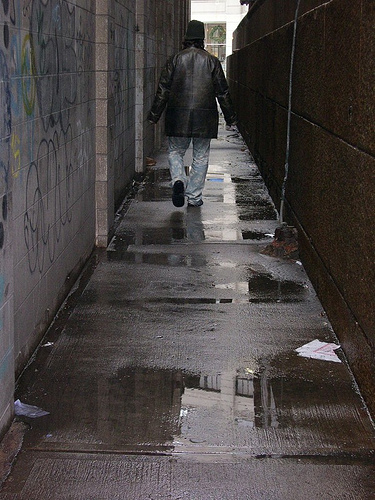
home before dark

Related to an earlier post about consulting, I had an interview with a ‘traditional employer’ back in the mid-2000s. I’d had a long standing consulting relationship with the company and was even offered a position with them about a year into working with them. Once every six months there would be a brief flurry of interest about bringing me on board as a regular, full-time employee. The last time this happened, when I received an offer, I wasn’t ready to join for many of the reasons I mentioned in my earlier post: I wasn’t willing to give up the flexibility or decent hours that I enjoyed. Another reason I didn’t share with them was my general state of mental exhaustion with audit and Sarbanes-Oxley. I just couldn’t bear doing that full-time forever, and hoped to start transitioning more to finance and systems.

So we went through another little series of feints at one point and I was left feeling a little queasy. A new group had been formed in the company to do work similar to my area of specialty, but probably a little more technical than my usual ‘big picture’ work. I interviewed with two women, both of whom were very pleasant. I had spoken with one of them before as a consultant, but she didn’t remember me and I didn’t bring it up. The other one I hadn’t met before, but she placed a great deal of trust on the recommendation from the woman I had reported to for the on-and-off couple of years I had worked with the company.

Both of the interviewees made cheerful - almost gloatingly so - references to how hard they were working and how much travel they were doing and how they worked weekends and late into the night. It made me a little bit sad and a little bit angry both at myself and at the culture I live in.

They were proud of spending so much time away from home. One of the women told me how important it was to get along with the team because you spend more time at work than you do with your family. True, perhaps. But I thought ‘how sad for her family.’ When did that sort of thought process become normal? I think it is important to get along with your coworkers, but the way in which it was presented made it seem like it was a choice, and that the choice should be to focus on your colleagues even at the expense of your family.

Corporate professionals aren’t really compensated fairly. I wonder how you would feel if you calculated how much a Fortune 500 company makes in profit per year and then think about what your share of that profit was. If they have a good year, does your gross go up? No. If they have a bad year, do you get laid off? Maybe. The upside goes to the executives and the downside goes to the employees. I think half of the corporate workforce would like to say “hey, if I work hard and I’m successful, I want to be paid more.” I guess you might argue that’s what promotions do, but there are definitely plateaus there. I took a huge leap when I went from staff to management but once I hit management it definitely was a declining rate of increase each year. I make a lot more as a consultant, and if I work long hours I get paid overtime. If I work less, I get paid less. If you’re a corporate employee on a salary, please do this exercise: keep track of when you arrive and leave at the office for a month, and then take your monthly salary and divide by hours worked. Include time spent at home checking email, too. It’s the only way to be honest with yourself about what your ‘true’ salary is.

Are people just really good at hiding their emotions? I saw dozens of people in the office churning away at their work, seemingly content. Maybe they were just hiding it better than I am, but I wondered when exactly I lost that burning desire to claw my way up the corporate ladder - and to do it cheerfully. I definitely had it – I worked long hours and played the political games with the best of them for most of my early career. But somewhere in there my will to sell my life to my employers just died. I view my work as a distraction from my life, rather than the other way around. Article after article that I read tells me that unless my work and my values and my goals align, I will be miserable. That may be true, but a significant component of that equation is simply the number of hours you spend on work you aren’t that interested in.

What is the effect on young families? I really dread the consequences of generation after generation of kids growing up in America seeing their parents once or twice a week on the weekends. One of my favorite quips is that no-one ever wishes on their deathbed that they had only spent a little more time in the office.

Does it matter if it ‘matters’? I have done my bit of mentoring and helping younger people become successful throughout my career, I guess. I have paid my taxes and earned enough to create a good home for my wife and kids, which took some effort after 2008. I don’t work for Halliburton or the Carlyle Group. One of the biggest disconnects I had with the big client I mentioned at the beginning of the article was my suspicion from my time working there that something was rotten in Denmark. My suspicions were borne out in 2008, of course; just read The Big Short: Inside the Doomsday Machine.

But I didn’t take the job offer, obviously, and after 7 years of consulting I still come home while it’s light out 99 out of 100 workdays. That may not be everything, but it’s something, and my hope is that for my kids it’s a big something.
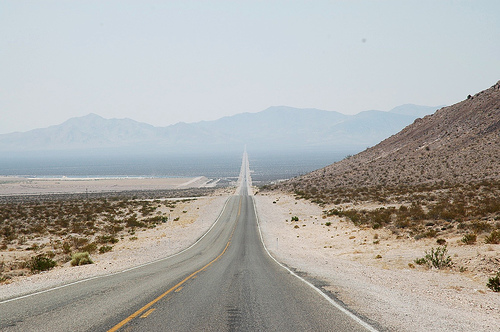
the whole life sabbatical (part 3 of 3)


Creative Commons License photo credit: mistress_f

In part 1 of this three-part series I talked about walking away from various responsibilities in your life. In part 2 I talked about whether it would be easy to leave them. Now I’m going to bring it together with my thoughts on “walking away from it all.”Would it make you happier? In each area, it really depends on how happy you are now. Simply dropping a responsibility doesn’t make you happier. It can, however, free up enough time to allow you to pursue other activities that DO make you happy. I will argue this – almost no personal growth is possible without giving up something; without walking away from something else.

Work: For most people, this is the big one. I have a picture of a “workless” life and a picture of a “better work” life. I think most people say “oh, I couldn’t be happy without regular work, something to do, yada yada.” That’s not the case with me - I really get a lot of enjoyment out of learning and engaging in the regular business of day to day life. I’m not sure I need an avocation, per se. But I realize nobody is going to pay me to play with my kids all day every day, so I imagine “walking away from my work” ending up as walking into another job. I’d just like the hours to be flexible and more or less self-directed. But I do recognize this point: nobody will get a dream job, a dream career, the flexibility they’ve always desired without walking away from the one they have now. In order to achieve fulfillment in your work/career, you must be prepared to walk away from everything you have now.

Family: In the example I mentioned (should you take an infirm elderly relative into your home or support them by placing them in an elder care facility), it’s a tough choice people make all the time. My family has done so. You can’t ever abandon your family, but you do have to be able to let go and move on to develop other relationships. I see less of my brother than I did when I was younger and we lived together. I see less of my parents than I did when I lived at home. I even spend less time with my wife once we had a son, and now that we have a daughter, also, I have to spend less time with him. But each time when you take a little time away from someone, it doesn’t mean – or at least it doesn’t HAVE to mean – that you lose any of the strength of that relationship. In some ways it makes time you spend with those people even more intense, if you value them. By giving up time with one person you can grow your relationship with another – and it’s not a zero-sum game. I don’t love my brother or parents or wife or son any less as more people have been added to my family – if anything, it makes me appreciate everyone even more.

Finances: Walking away from your financial responsibilities is one of the best things you can do for yourself – unless you enjoy having a financial responsibility to your digital cable. Each time I’ve jettisoned a financial commitment it has not felt like a sacrifice – it’s felt like freedom. I have a long way to go, and some responsibilities are better than others: I don’t mind my mortgage because it allows me to keep my investments liquid and enjoy a pleasant home. But completing the lease on my car and buying the next one for cash, and ending that once-a-month reminder of money floating away was a source of huge satisfaction. Sometimes I think happiness can be defined more easily – on a financial basis – as the lack of things, rather than the possession of things. I will be wealthy, but I want that wealth to be expressed in a house and financial freedom and security for my family and travel and experiences, rather than in Wii’s.

Life: And finally, life. Can you walk away from your health? No. Can you walk away from other parts of your life? Yes: you can walk away from everything about your life that’s negative. How many people do you know who cling to failed relationships, or bad habits, or make themselves sick by living in unhealthy environments? Life is the one area you have to learn to walk away from. Don’t accept the idea that you have to have some misery in your life. Don’t accept “no pain, no gain.” There is gain without pain.

So what was I getting at with these posts? Too often I read about, and think about what I need to GET or ACQUIRE to achieve goals. Too often people think I NEED that to be happy, or I have an OBLIGATION to stay in this situation. Try not to think of life as a series of things you HAVE to do. These are not powerful words. Try to think of life as a series of experiences you WANT.

Identify what’s not working for you, and walk away from it – what are you waiting for, your next life?

the whole life sabbatical (part 2 of 3)


Creative Commons License photo credit: ribena_wrath

In part 1 of this three-part series I talked about walking away from various responsibilities in your life. How easy would it be to leave them?

Work: If you stop to think about it, you have almost nothing stopping you from quitting your work. If you own a business, you can sell it. If you are an employee, trust me - if you quit you will be a distant dusty memory to your former coworkers in a week. If you are a freelancer, refer your clients to your freelancing network. I am sometimes stunned in a corporate environment by the loyalty and responsibility people imagine they must demonstrate before quitting, when the same company might lay that person off and tell them to clear their desk in 15 minutes. I don’t advocate just walking out, but if you stopped your job today, the world would continue. You would find new work tomorrow.

Family: You have to take care of your children and parents. But consider this: you have a responsibility to provide your children with food, shelter, education, love, trust and hope for the future. Do you have a responsibility to provide them with a Wii? An iPhone? An Ivy League education? A home? There is a line there that everyone must draw for himself, and I’ve seen it done in both extremes: parents who sacrifice everything for their children or brothers who care for unmarried sisters or children who go to great extremes for their in-laws…as well as people who walk away from even the responsibility to put food on the table. With family, your responsibilities are easy to walk away from, but for many of them you cannot walk away and look at yourself in a mirror. However, you can say to yourself “I have no obligation to buy my child a car.” It will not destroy your family.

Finances: You can walk away from your financial responsibilities to the extent that you’re prepared to lose things. The biggest obligation you have is taxes. Fail to pay those and you’ll go to jail. But if you make less and less money, eventually your obligation to pay taxes will drop away. Other obligations, at the end of the day, are optional, although some are easier to downgrade than eliminate completely. If you have a huge mortgage, you could sell the house and live on the streets (extreme) or live in a smaller house with a smaller mortgage (less extreme) or rent. If you spend $300 per month on entertainment, you can eliminate it completely - but at some point even “free” entertainment costs money (you need shoes to walk in the park, for example). You can’t walk away from finances as easily as you might think. You can walk away from some of them, but leaving them all behind is almost impossible.

Life: Obviously, you can let a LOT go in this area. You can start eating crap, quit exercising, and in various ways neglect your life. It might be a nice change for a while, but there will be consequences down the road. I often wonder how far you could push this “life sabbatical,” though. Could I get by on raw vegetables, fruits, bread, cheese, tea and water for food (i.e. forget about cooking)? Could I exercise by just walking or biking everywhere (i.e. selling my car)? Could the lack of stress be the biggest health improvement I could make?

In part 3 I’ll look at whether you should walk away from your life and take a “sabbatical”.

the whole life sabbatical (part 1 of 3)


Creative Commons License photo credit: urbanshoregirl

Have you ever just wanted to chuck it all and walk away? To just walk away from your commitments and responsibilities and start over again somewhere else? Why didn’t you?

I started thinking about the practicalities of walking away from my entire life of responsibilities after learning an acquaintance had done it. I divided my responsibilities up in a few different groups: work, family, finances and life. Each one has different implications in terms of walking away, and before anyone thinks I’m about to start discussing walking away from your family or your finances - don’t worry! I have a different mindset, and hopefully it will become clear what I’m getting at in parts 2 and 3.

First of all, what ARE your responsibilities?

Work: Chances are good that you work for a living. Maybe you are an employee, or a freelancer, or a small business owner. Your responsibilities for each of these types of work are similar but not the same. If you are an employee, you work at a business. Maybe you serve customers, or work in a group, but for the most part you have nobody who relies on you for their livelihood; the company pays their paycheck, not you. If you are a freelancer, nobody depends on you for their livelihood but customers may rely on you, particularly if you function almost as a “part-time” employee for their business. The most responsible position of these three would be a small business owner. If you have employees, you have people who depend on you.

Family: If you have a spouse, or elderly parents or children or any close family you support (or help support) you have a tremendous responsibility to them. You may share that responsibility (for example, if you are married and have kids you and your spouse both provide overlapping types of support) but in many cases this dependency is total and desperate (think elderly parents or newborn children). How easily could you walk away from family (or even close friends who are like familiy)? People do it all the time. Divorce and abandonment are extremes. I’m thinking more of cases like this: do you bring your aging parent who requires almost-around-the-clock care to live with you if you are able? Or do you send them to an assisted living/nursing home facility? It sounds cruel, but should you neglect your other family to care for someone who probably needs better care than you can provide? It’s a difficult question.

Finances: You have commitments to be paid - rent, mortgages, taxes, utilities and so on. Some are less critical than others. Your cable TV is a fairly mild commitment you could end without much worry. Your electricity? Less so. Your taxes? I wouldn’t advise it - we can’t all be Wesley Snipes. This area is fairly clear cut morally, although there are gray areas - would you walk away from a mortgage if your home plummeted in value, in order to get a fresh start? I would, but some people think this is irresponsible.

Life: You have responsibilities to things in your own life that cannot be pushed aside. Food must be eaten, health must be maintained and medical care is sometimes necessary. You can switch from caviar to tuna fish, but you can’t stop eating. You can decide to stop taking multivitamins, but if you suffer from diabetes you’ll still need insulin. You may even have responsibilities to your friends, your neighborhood and your church/temple/mosque/etc., but these could vary so much it’s hard to make an overarching simplification, and I wonder if those are truly responsibilities. I suppose if you are a community-centric person they might be. I will argue that you have almost no other responsibilities. Do I have a responsibility as a citizen for certain things? I guess so. Voting, jury duty, paying taxes and so on are all “national” responsibilities, but let’s face it - you can walk away awfully easily from most of those. Whether you should is another question.

So did I miss anything? And don’t tell me it’s impossible to walk away from any of these commitments, because you can, without a doubt. These are the major areas of obligation in most of our lives, other than a sense of civic duty. In the next two parts I’ll talk about (1) whether you could walk away and (2) if walking away would make you happy. We all say we want freedom - but do we?

what your trash says about you

I’ve noticed that I can make a few snap judgments about my family’s life based on our trash output. We are not a particularly “green” family, although I am passionate about environmental issues. Trash output is one are where I definitely talk the talk but walking…not so much. If you take a close look at your trash, you’ll notice that the decisions you make on a daily basis affect both the quantity and “lack of quality” of your trash. I have noticed a few areas where we can make improvement:

Reduce the volume.

The mantra “reduce, reuse, recycle” is universal by now. The focus is far too often on recycling. Recycling your plastic bottles is a good step to take, but not buying them in the first place is infinitely superior. I’ve written about this before, but the excess packaging that surrounds us has become insane. Given a choice between two otherwise equal items, I’ll go for the less excessively packaged item most of the time. Every time you buy loose fruits instead of fruits in fancy containers, for example you’re doing well. Using a reusable bottle for your daily water instead of a Poland Spring drink-and-toss bottle is an improvement.

Consider your long-term choices. We didn’t think much about disposable diapers - we just headed right down that path. With a 500 year decomposition time our decision to use disposable diapers will affect our great-great-great-great-great-great-great-great-great-great-great-….grandchildren (you get the picture). I buy so many items without stopping to pause and realize: that crap is going to be here FOREVER.

Don’t throw it away.

Hoarding items can become an annoying habit or a frugal, environmentally friendly way to live - but the border between them is razor-thin and constantly shifting. I’ve saved boxes before, and let’s face it: if you’re a member of Amazon Prime, or shop through drugstore.com, you get boxes all the time. However, if you get an Altoid tin, it can make an excellent storage container for nails or other small items in your tool storage area (just make sure you have a labelmaker handy)!

Composting isn’t easy or fun. In an urban environment, or a condo association, it may be outright forbidden. At the same time, if you can do it I think it would feel much better to throw organic waste into a composting bin rather than tossing it in a landfill. It might be a “self-smugification” action, but so be it.

Give it away. Often if people have large items they don’t want anymore it’s easiest to put them in the dumpster. We finally jettisoned old, broken down bachelor furniture I had dragged around for many years, but we gave it away rather than dumping it (my first instinct). If there is a Salvation Army or Goodwill near you, take a shot. Freecycle or hit craigslist. Sometimes it’s hopeless - my massive 500-pound Sony TV is so heavy that nobody has ever been interested, even for free.

photo credit: mugley

Money.

I’m going to be beating a dead horse here, but the amount of trash you generate is probably proportionate to the amount of money you spend. If you spend a lot, you probably generate a lot of trash. Cut back on your spending, and you will generate less. It’s not always true - getting a free cell phone with a 2-year contract and getting a $500 iPhone both generate a lot of junk packaging waste. But as a general rule, you’ll be better off with trash if you spend less.

Separate.

I am lazy. Throwing an unwanted Land’s End catalog in the trash is not hard. Bundling it up for recycling takes five more minutes, and that’s usually five minutes I FEEL I don’t have.

Make choices at the source. We can recycle our plastic and glass bottles in my community - but not aluminum cans, or juice boxes, or paper milk cartons. Buying containers that can be recycled, as opposed to ones that must be thrown away makes a slight - but important - difference.

Think about needs.

This relates to reducing, but simply think about needs. Are you going to go throw a gallon of milk a week? Buy a gallon, not quarts of milk. Are you going to eat 50 apples before they go bad? No? Maybe buying 6 or 7 is enough, even if you’re missing out on a good deal on 50.

You may think you need those steel-toed boots for gardening, but you know what? You’re not Sven the Hardy Pioneer, you’re Sven the Twice-a-Year-Hole-Digger. Use your sneakers. The boots are going to end up in the dump practically unused.

Think about the future.

I have noticed that there is often a conflict between health and the environment. I like to use paper towels. We have small kids, and I like to know that after I get raw meat on my hands cooking I’m not washing and wiping my hands on the same rag I might use to wipe my son’s hands after an energetic painting session. Paper towels give me peace of mind about hygiene.

Yet at the same time, I have always been blown away by this thought: almost every single thing you have ever thrown away - paper towels, apple cores, packaging, a bottle you forgot to throw in the recycling bin - is still lying in a pile somewhere on this planet. EVERYTHING. If you threw away a yo-yo in 3rd grade, it’s sitting in a pile somewhere. Forget the environment for a minute. Forget the toxins in the air from manufacturing that yo-yo, or transporting it from Taiwan to you, or the plastics it’s made of: that yo-yo still exists.

Everything I ever threw away still exists. It didn’t become fairy dust. Someday there may be a magic incinerator that can turn trash into edible food, or oil, or fuel (a la Back to the Future). Yet the simple fact is that future generations will come and go hundreds or thousands of times over, and that stupid plastic packaging that your iPhone headphones came in will still be sitting there. Daunting.

31 causes of failure #6: ill health

sick butterfly

sick butterfly

I abandoned this series (based on the 31 causes of failure Napoleon Hill lists in his classic Think and Grow Rich) for a while, but then I decided that abandoning it was actually succumbing to the fifth and most recent cause I wrote about: Lack of self-discipline. Unfortunately the next cause of failure is one that’s somewhat out of our control: ill health. I’d like to put ‘ill health’ into two different categories and examine why one of them is far more likely to be a cause of failure than the other.

The first category is out of our control. You can get sick for reasons completely outside your control: you can have a genetic disposition towards cancer, or suffer a car accident or simply be unlucky enough to come down with some disease. It happens; we’ve all heard anecdotes about perfectly healthy people who suddenly got ill for one reason or another.

The second category is more unpleasant: illnesses you cause. You eat too much junk food and become obese: say hi to heart troubles, diabetes and hypertension. Smoke and you invite cancer. Live a stressful lifestyle? Get ready for all sorts of illnesses. It’s easy to assign blame, of course, for blatantly bad behavior. But most people indulge in some behavior that’s not ideal; few of us are perfect exercise machines with carefully and consistently monitored food intake.

Here’s the kicker about ill health, though. More than any other item in this ’causes of failure’ series, ill health can derail your plans and prevent you from achieving your goals. Why? Just read.

  • Medical bills make up half of bankruptcies
  • Half of Bankruptcies Due to Medical Bills, Harvard Study Says
  • bnet: Medical expenses responsible for half of U.S. bankruptcies, according to new survey.
  • Healthcare Crisis In America Medical bankruptcy: middle class families at risk (Dr. Elizabeth Warren, Harvard Law School, Testimony before House Judiciary Committee 2007).

29% of people with credit card debt indicated that some of that debt was medical-related. It’s a bit dated, but a 2006 USA Today, Kaiser Family Foundation, and Harvard School of Public Health survey showed that 25% of the households affected by cancer said they had used up all their savings dealing with the fallout from cancer, and one-tenth could not afford basics such as food, heat and housing. The United States is the only industrialized country in the world without a universal health insurance system. U.S. health care spending is approximately $2 trillion per year, or $6,697 per person. The United States continues to spend significantly more on health care than other countries in the world.

In 2006, the U.S. census reported that more than 45 million Americans had no health insurance; more than 9 million children lacked health insurance in America (those are dated stats, of course). I don’t intend to get into politics for more than a second here, but the health care bill - mockingly and (in my opinion) disrespectfully called Obamacare - will not fix these problems. It may help slightly, and it may hurt slightly, but the root problem hasn’t been fixed: you can be financially destroyed by a medical problem.

That’s the issue. Is it fair for someone to lose their life savings because they get cancer? I don’t think so - but that’s the way it is now, and I doubt that will change anytime soon. In my opinion, only universal single payer health care can solve this situation; whether you view that as a good or bad thing is up to your own political mindset. So for this cause of failure - one of the most important ones, over which we have some of the least control – you have to be extremely focused. Ill health can impair your ability to work; it can drain your savings; it can make progress towards your goals difficult, or even impossible. Taking care of your health is the single most important things you can do for your wealth. I’ve written before about losing weight and how I quit drinking soda. Regular exercise and a low-stress lifestyle are key, as well. But it’s important to remember that the sixth cause of failure from Hill’s Think and Grow Rich is one of the few that sometimes lies outside our control.

Previous posts in my “31 causes of failure” series:

Photo Some rights reserved by Eliezer Borges

how to develop good habits

A woman walked up to a little old man rocking in a chair on his porch.
“I couldn’t help noticing how happy you look,” she said. “What’s your secret for a long happy life?”
“I smoke three packs of cigarettes a day,” he said. “I also drink a case of whiskey a week, eat fatty foods, and never exercise.”
“That’s amazing,” the woman said. “How old are you?’
“Twenty-six,” he said.

For the sake of argument, let’s say that habits fall into two general categories: good habits and bad habits. A good habit is flossing every day. A bad habit is smoking. Some habits might fall somewhere in between, or depend on frequency. Flossing every day is a good habit. Flossing once per month isn’t a bad habit, exactly, but it’s not - strictly speaking - a good habit either. Eating a huge overcooked steak once a year is not a terribly bad habit. Eating one for breakfast every day is.

But let’s stick with good habits and bad habits, because most people can tell the difference and don’t need more distinction than that. Most of them can then be thrown into another three categories:

  1. habits you should break - debt, looking down on things, negativism
  2. habits you should take - wake up early, play outside, etc from when you were a kid
  3. habits you should make - positivity, frugality, love

We’ll call that break, take and make.

Break
In a sense, it is often a lot easier to identify a negative habit than a positive one. Overeating or smoking or playing too much Halo is usually a fairly easy pattern to spot. However, the habits that you need to break are often either very pleasurable (overeating for example), or arise from addiction (smoking), or are based on deeply ingrained behaviors (negative thinking). So how do you go about modifying bad habits? What are the methods for eliminating them from your life?

  • Stop. Sometimes a bad habit just needs to cease. If you smoke, stop - get some nicotine gum instead. If you watch 6 hours of TV per day, disconnect your cable. If you gossip, turn the subject to sports or politics or movies. This method is hard, and frankly almost never works - but sometimes it’s worth a shot.
  • Modify. If you drink Coke, try switching to diet Coke, or diet Sprite, or ginger ale, or seltzericon - or cycle through them in that order. You do not have to immediately stop a habit. Take baby steps. If you don’t exercise, don’t imagine that you will run a marathon the week after you start taking a 20-minute walk; but DO imagine that you’ll take a 25 minute walk the next week, then a 45 minute walk, then a 20 minute jog and then - who knows? That marathon might not be so far away after all!
  • Inhibit. In another post I wrote about using a rubber band to help stop negative thoughts. You can use this extremely simple tool very effectively. The purpose is not to injure you or create a fear of an action, but merely to jolt your awareness. I think this is probably the easiest yet almost the most effective way to halt any bad habit. It is one of those exceptionally simple methods that most people scoff at until they try it. Give it a shot.
  • Journal. I have plenty of bad habits, but I have seldom seen one that can withstand a brutally honest journal. If your habit to break is sweets, keep an extremely detailed sweets journal. When, where, what, how many calories, why you ate it (sad? bored?) and almost inevitably you’ll notice a decrease. Writing things down will help solidify the habit in your mind, and make you think twice before engaging in it, knowing you’ll have to record that incident in your journal.

Take
When you were a child, you woke up full of energy and excitement on Saturdays. The cartoons were on, it was the day you were allowed to eat Lucky Charms instead of something good for you, and you didn’t have to go to school. You didn’t know it at the time, but waking up early was a good habit. It kept you from wasting half the day sleeping, making it harder to fall asleep Saturday night. It meant that on your weekends you accomplished “maximum fun” and really squeezed as much into the day as you could. Where did that habit go? Some of it left because you got older… because work beat you down … because you just NEED that sleep. You don’t have to leave this good habit behind you in childhood, though. Reach back into your past and take back these good habits. Take back the habits of playtime, of reading, of avoiding things that didn’t directly contribute to your health and happiness. These are habits which are just day-to-day simple tasks that improve the quality of your life. Examples could include:

  • Making time for play
  • Learning about things because you’re curious
  • Questioning “the way it’s always been done”
  • Never learning to sit still

Here are the first steps to doing this:

  • Identify those habits:
  • Remember how they felt
  • Ask yourself if there’s any reason you couldn’t still do that
  • With a nod to Prince: act your shoe size, not your age

Make
If you have seen The Secret, or read any similar self-help book, you’ll realize that the power of positive thinking is a hot topic right now. It has been a hot topic for hundreds of years, in fact, and there’s a reason for it. It works. Having a mental habit like positive thinking is a snowball habit. The more you do it, the more powerful it becomes and makes it easier and easier to maintain as a habit. There are other key “make” habits like this:

  • Eating a healthy, natural diet
  • Spending time with family and friends by actually being there; no Blackberries, no agendas, and no pressure
  • Making time for meditation
  • Daydreaming
  • Being kind

So how do you make these habits? I’ll refer back again to The Secret, but it could just as easily come from the works of Benjamin Franklin or any self-help individual in-between. You can control your thoughts. There is very little else in this world that you can control the way you can control your thoughts. Use that power to your advantage. Tell your mind “this is a habit, this will be a ritual and we will keep it.” Imagine you have already been doing this habit for years. Imagine that it has made you happier, more fit, richer, calmer - whatever it is that you want. You really have to visualize it, write it down, draw it or otherwise make it a real image in your mind. You will be amazed at how quickly your mind adapts to a “new reality” once you order it to. A habit is not a set of chains or a gun pointed at your head. It is 100% the result of your mind, so only you - as the person in control - can change your mind and therefore the habit.

try something new, and links

I’ve been working on something with my son. It’s “try something new”. I have made an effort to convince him that he should try something new, and if he likes it, great, if not, fine. I’m mostly applying this concept to food but it’s relevant to things like trying new sports or ideas or so on. I realized this morning - while I was talking to him about the concept of trying something new - that it should apply to all of us. None of us should ever settle for stopping learning, trying, tasting, etc. But it’s easy to do. I quit REALLY trying new things years ago. Hopefully I can shake myself out of that pattern soon…

Here are a few of my favorite reads this week:

A Frugal Daughter’s Guide to Back to School Shopping: Always interesting to get a different perspective - like a daughter’s, for example.

Should You Refinance Your Mortgage? Rates Are Low, But It Is Still a Tough Decision: I’m leaning towards doing a refi. I’ve got a good rate but the rates are so low now that the benefits to refinancing seem almost too good to believe.

To mini-retire or not to mini-retire? Escaping the Mundane: Great tips on how to break out from the “ordinary” life.

New UK Kindle a tax on literature?: Interesting take on the Kindle. My Dad LOVES his Kindle. I plan to get one soon - basically once the WiFi version hits $100.

7 Habits of Highly Frugal People: I’m working my way through this book for the second time (The 7 Habits of Highly Effective People). I didn’t like it so much the first time I went through but now I appreciate it more.

Why 99% Of Financial Advisors Should Be Shot Out Of A Cannon Need Extra Cash? There Are Only 4 Ways To Get It: The fours ways to make money are: * Start a business * Work more * Passive income * Spend less This is a great summary to clarify your thinking. Alternative income won’t just materialize. YOU have to DO something.

And a few more links that are worth reading:

making time for the details

A couple of years ago my car’s air conditioner had some problems and stopped working. To be more exact, the fan quit working except on the 5 (high) setting. I could have the A/C off, or blowing like a hurricane. I didn’t think about it too much - or rather I did, but decided I was far too busy to attend to a problem like this.

Some other things broke down a few months later and I decided to take the car in for an overhaul. The mechanics were mystified by the fan problem, and ended up keeping the car for an extra day. When I picked it up, I found out that a non-standard part had been substituted at some point in the car’s repair history and the result had been that the fan had shorted out not only itself, but a lot of the wiring in my ignition. I didn’t follow all of the technical details, but the mechanic summed it up this way: “you were lucky the steering column didn’t burst into flame when you turned the car on.” I let out a “whew” and decided that in the future I would try not to let “little” repairs go too long without checking them out.

The same is true for most aspects of your life. Think about all the areas where you need to check out the “little things” to make sure the “big problems” aren’t lurking:

  1. Your health. Going to a doctor once a year is a must, but if you’re lucky enough to have insurance, that insurance probably also covers vision, dermatology, podiatry, etc. Make an effort to work visits to specialists in occasionally to make sure that no problems are lurking (for example, getting a glaucoma test once a year from an optometrist or checking out that new mole that might be the warning sign for skin cancer).
  2. Your financial future. Check on your insurance policies and your will. I am up-to-date on insurance, but Bubelah and I still don’t have a will. I wonder how I can really offer much financial advice when I haven’t gotten that one piece of critical financial planning done myself, but do as I say, not as I do in this case. Put money away in savings somewhere. Don’t waste too much time worrying about Roth IRAs versus 401(k)s, for example - just start doing it.
  3. Your family future. Make sure you check on the little things with your family. Understand what’s going wrong with your relatives, your spouse or your kids before it becomes a bigger issue. This could be health, school, social life, finances, etc. Anyone you feel responsible for needs a “checkup” from you once in a while.
  4. Your home. If you own, making sure your home is in good shape is no small exercise. From alarm systems to air systems maintenance to just checking out the drafty places around the window, fixing little problems now can prevent big problems tomorrow.
  5. Your political future. I know people get more excited about presidential politics in America, but let’s face it - your Senators and Representatives (both federal and state) and even your local officials have more day-to-day influence on your life than the President does. I know worrying about who gets elected to the state senate isn’t as “big a deal” as presidential politics, but it matters. The people who sit on your local school board probably have more influence over your daily life than you imagine, even if you don’t have kids.
  6. Your life, the universe and everything. Little things that bother you today can become a bigger problem tomorrow. If you’re unhappy about something today, don’t let it fester. Even if you can’t fix it today, take one tiny step toward correcting it.

I am often more worried about the long-term, big-picture issues and grand questions about life and history and whether the Jets will win a Super Bowl in my lifetime, but little things like avoiding a fiery steering wheel column through dumb luck remind me that I need to pay attention to the details in life, too. Don’t wait until the little problems become big problems; I don’t know of many problems that disappear on their own.

photo credit: swambo

<a href=”http://www.bripblap.com/what-is-better-from-a-tax-perspective-a-roth-ira-or-a-401k/”>What Is Better from a Tax Perspective: A Roth IRA or a 401k?</a>

Wake Up on the Right Side of the Bed Every Day

sleeping cat on bed

A positive attitude can be as elusive as a perfect cheeseburger, shoes that are both gorgeous and comfortable, or a TV show with a compelling and engaging script (we’re all missing Lost right about now). But by starting every day off on the right foot, literally rolling out of bed with a spring in your step, you are much more likely to live your life in a positive way and enjoy the many things that make being alive worthwhile. So here are a few ways to get on board with positive thinking so that every cheeseburger tastes better than the last (shoes and sitcoms are sadly beyond your control).

  1. Eat when you’re hungry, sleep when you’re tired. In this fast-paced world, we train our bodies to go without food and sleep much of the time. We skip breakfast and rush through lunch, only to pop a high-sodium calorie fest of an instant meal in the toaster or microwave when we get home (yes, we are all guilty of eating Pop Tarts for dinner once in awhile). We scrape by on five or six hours of sleep and lament the fact that our eyes are baggy and bloodshot and we just can’t seem to get rid of those ten extra pounds of spare tire around our midsection. But you can live like the Buddhists and lead a happier, healthier life by listening to your body and responding to its needs.
  2. Learn to say “no”. This may be the most important word in the English language, as every two-year-old knows. In order to put yourself first, you have to learn to deny demanding bosses, shrug off guilt-laden requests from friends and family, and stop yourself from joining every club and charity on the planet. Just say no! Schedule in some time for yourself and don’t let anyone deter you (especially YOU).
  3. Appreciate what you have. The world is full of have-not, why-me, and grass-is-greener complaints. Don’t be one of those myopic souls who can’t see the good that’s staring you in the face. Instead of wondering why you got passed up for promotion, get proactive and seek out ways to improve your standing and recognition. Don’t try to keep up with the Joneses (or Kardashians, or whoever else has more money, fame, and acclaim). Live well, within your means, and love the life you have. Being content is a big part of being positive.
  4. Create something. Working in a soulless corporate environment can often make you feel like you’re just spinning your wheels. So think about ways in which you can produce something tangible in your life that makes you feel good. Plant a garden, paint a portrait, or build a scale model of Devil’s Tower in your living room. There are plenty of ways to enjoy the creative outlet you desire, so make something (anything), even if you think it will be bad.
  5. De-clutter. This is something that you can do both physically and mentally. Proponents of feng shui will tell you that de-cluttering your living space will simultaneously clear your mind of debris. There may be some truth to this, but the two do not always go together. However, a clean house will certainly allow you to relax and enjoy your free time more, so it couldn’t hurt. As for a worry-free mind, that is easier than you think. If you have a problem, write it down and forget about it. You can always come back to it if you need to, but the simple act of releasing it from your thoughts will take a weight off your shoulders and allow you to focus on something more positive.

Today’s guest post was written by Kyle Simpson. Kyle writes for Medical Billing and Coding Schools where you can find more information about a career in medical billing and coding.

Photo by kevindooley

yo soy español, and links

Spain won! Oh. Well, fine, Bubelah and I spent half of our honeymoon in Spain - and it was a lovely place - so fine. I can’t say I got “into” the World Cup this time around, but I’m moderately happy Spain won. I’ve been to the Netherlands more times than I can count and I have only vague recollections of it. Nothing against it - I actually quite liked it - but it was just blah, like Germany or France, in a hazy “Euro” kind of way. Much like parts of America, it’s had many of the things that make it a pleasant country “blanded out” into a smooth, beige Europeanism. Spain still has a bit of individuality. So great that they won, and kudos to the Netherlands for keeping it close til the last second. So there are my vague touristy-and-business-travel-y impressions of a few countries.

Once again, I managed to get a bit behind on the links post, but for good reason. My parents have been visiting while Bubelah visited New York briefly to check on a sick relative. Once she returned, we also had a fun visit with my aunt and uncle, so it’s been busy! One of the things that I love about short-term unemployment is the freedom to spend time with people. Just for the record, the thing I hate about short-term unemployment is the lack of income. Even though we have a healthy go-to-hell fund, I hate seeing it eaten down.

Read this:

One miscellaneous announcement: I’d like to put up a series of posts from people talking about their takes on careers or entrepreneurship or anything like that, centered around the theme “why my work makes sense to me.” I don’t know if I’ll get a lot of response, but if you love what you do and want to write about it on brip blap, I’d love to share it. It’s part of a larger project I’m working towards (an e-book, I’m certain that’s a shock).

once more into the breach, and links

King Henry V:

Once more unto the breach, dear friends, once more;
Or close the wall up with our English dead.
In peace there’s nothing so becomes a man
As modest stillness and humility:
But when the blast of war blows in our ears,
Then imitate the action of the tiger;
Stiffen the sinews, summon up the blood,
Disguise fair nature with hard-favour’d rage;
Then lend the eye a terrible aspect;
Let pry through the portage of the head
Like the brass cannon; let the brow o’erwhelm it
As fearfully as doth a galled rock
O’erhang and jutty his confounded base,
Swill’d with the wild and wasteful ocean….

Read the rest.

One of my favorite poems/sonnets/monologues/sayings/etc., right along with “Kill them all, God knows His own“, “”I pray thee, then, Write me as one that loves his fellow men“, “anyone lived in a pretty how town” and “Annabel Lee“. I bet you weren’t planning to get a list of Steve’s top five poetry/quotes selections, were you? Oh, and I’ll throw in almost everything this dude said, too.

Once more, I’m off into between-contract land; my current contract is ending and no new one is in sight. Thankfully I have my go-to-hell fund ready and no panic whatsoever on the horizon. I’ll work more on self-employment and blog monetization, and see what comes next, without fear. It’s a better feeling than being laid off while living paycheck-to-paycheck, I bet.

You Can Be Rich Without Being Smart: Amen. This is something that’s not discussed often enough. I know a lot of smart middle class people and a lot of less-than-smart upper class people. It’s neither good nor bad - there’s no harm in being middle class - but book smarts are completely and utterly unrelated to “wealth smarts.” Far too many book smart types - like me - become risk-averse and complacent based on the idea that employment in a highly skilled position is “success.” Let me tell you - it’s not. Success is doing something you want to do, not just having the brains to do something you hate (but are good at doing).

The much maligned Robert Kiyosaki: Amen. Here’s the best quote, as far as I’m concerned: “His book – at the time – inspired me to look into the field of personal finance a LOT further.” I couldn’t agree more. He spouts a lot of junk, but his statements (like “a house is not an asset”) really struck a chord in me and made me think a LOT more about personal finance. Take everything he says with a grain of salt, but he will make you think…without a doubt.

Increasing Penalties for Health Savings Accounts: An interesting series, especially since I’m making the transition to an HSA account for my family.

Financial Challenges for the Class of 2010: I am very, very grateful I’m not a grad. Good luck to the 2010 grads, but man… the times they are a-changin’… and not for the better.

Watson Inc: Millionaires Make a Return To Boom Levels: Eliminate Consumer Debt and Build Wealth: Some interesting stats here. Rich (or rather, I should say “wealthy”, since that conveys a mindset/lifestyle rather than a purely numeric status) people make money even in “down” times.

8 Critical Steps Every Family Should Be Taking to Prepare for the Next Financial Crisis: There will be another financial crisis. The US is not in any way, shape or form situated for the rapid growth so many of us grew to know and love in the 90s and mid-oughts. Maybe there will be another bubble, but next time there won’t be as much money for a “stimulus” package. The money is running out. Inevitably, there will be a stopping point for Citi and AIG and all the other boondoggle spending.

Caretaking As a Career Option – What’s In It For You?: Huh. Well, not a career path I knew much about - it sounds interesting.

Live Sports: One More Reason to Get Rid of Cable: Er…not quite. The day the NFL shows up on Roku, though, I’ll be fairly close to killing my cable subscription.

Why It’s Frugal to Live in Colorado: I’ve never been there, which is weird to me. I’ve been to Siberia, Kuala Lumpur, Indonesia, the back country of Romania, etc. - and never to Colorado. I’d like to go, though - I have seldom heard anything but good about it.

And a few more:

And of course, the greatest poem of all time (except, possibly, this one):

OZYMANDIAS

I met a traveller from an antique land
Who said: Two vast and trunkless legs of stone
Stand in the desert. Near them, on the sand,
Half sunk, a shattered visage lies, whose frown
And wrinkled lip, and sneer of cold command
Tell that its sculptor well those passions read
Which yet survive, stamped on these lifeless things,
The hand that mocked them and the heart that fed.
And on the pedestal these words appear:
“My name is Ozymandias, king of kings:
Look on my works, ye Mighty, and despair!”
Nothing beside remains. Round the decay
Of that colossal wreck, boundless and bare
The lone and level sands stretch far away.

Poetry started and stopped for me with that poem. Amazing. For the most part poetry and Shakespeare and the lot bore me, but once in a while, when I’m in a reflective mood, it blows me away.

1 2 3 16