Tag Archives: career coach

coffin (2)

I don’t want to leave this job in a coffin

This post was inspired by a great post over at Money Smart Life called Life’s Too Short for a Crappy Job; I left a comment there, but I felt like I should repost and expand what I talked about there. I’ve been a victim of the keep-your-job-at-any-cost mentality. This is what happened to me.

I vividly remember about 12 years ago working at a consulting firm I hated. The hours were ridiculous. During the busiest part of the year 80-90 per week was standard. I broke the magic 100 one time; I’ll save you the math and point out that’s 14 hours a day, 7 days a week. In at 8 or 9 am, out at 11 pm or so.. The pay was pathetic (on an hourly basis less than minimum wage, since I didn’t get overtime). I worked so much that my girlfriend at the time dumped me after one too many cancelled dates. And worst of all, my hatred for the job and exhaustion started to cause me to make mistakes, which made me work even longer hours to fix them. But worse problems loomed.

In the story at Money Smart Life, a few of the people sticking out their terrible jobs develop tooth-grinding conditions that require dental care and maybe even surgery. And here’s what killed me about that: someone develops a teeth-grinding condition and doesn’t realize their job is killing them? They complain about their job, they suffer terrible illnesses, and don’t DO something about it? Like quit, right away?

I thought “that’s ridiculous” and then I remembered that close to the end of my awful consulting job I developed an ulcer and threw up blood a few times…. and didn’t quit. I was throwing up before and after work and thought it was just because I was stressed. Think about that and wonder why I’m not crazy. Or why I am.

What finally made me quit was this: I was getting ready to go to work one morning. I had a cold and was feeling a bit woozy, but it was a big meeting. As I put on my tie, I fell down on the floor and passed out for a few minutes. When I got up, I STILL went to work (not the hospital). I waited until after the meeting to go to my doctor, who informed me that I didn’t have a cold - I had pneumonia AND bronchitis. And that I would probably be dead in six months if I didn’t address my health.

Really - he said that. Dead in six months. He wasn’t kidding. He said it in a very doctor-ish tone, so I knew he was serious.

It took that to make me quit. And I was single and didn’t have a mortgage or car payments or anything that really tied me to that job, other than the idea that this was MY JOB (in all caps). I had destiny, and the Protestant work ethic, and I would NOT QUIT (again, in all caps). There was no reason I couldn’t quit, though, except that I was career driven. I’m not in that line of work anymore, by the way. What a waste.

I look back on it and wish I could go back and punch myself in the head and tell myself “life’s too short for a crappy job.” Completely true. Well worth remembering here, close to the start of a new year. If you’re having health problems because you hate your job that much – don’t kid yourself. It’s not you… it’s the job. Quit.

Photo is Some rights reserved by longhorndave
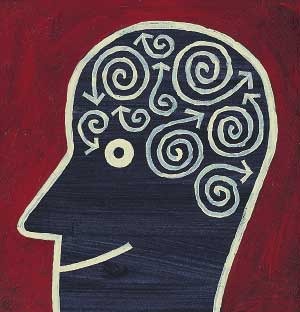
6 things to study for the well-rounded mind

smart-drug

What are the best subjects to learn for business - and life - success? If anyone sat down to identify the perfect secondary (and maybe college) education, I doubt they would come up with today’s average American curriculum. While there are plenty of courses in basic skills (reading, writing, mathematics, and so on) many other just as critical basic skills are overlooked (personal finance, homemaking, health/physical education). What are some of the critical components missing from our national curriculum?

From my own personal experience, I can suggest a few, but there are probably many more you can think of easily. I could also bash a few courses I took, but an argument can always be made for “knowledge for knowledge’s sake.” I believe that sincerely. I have never, for example, “used” A Tale of Two Cities in my day-to-day life, but I’m glad I was forced to read it, stuck with it and finished it. Experiences like that created a love of reading for me. Other subjects I guess can be chalked up to “generally good to know although not terribly useful.” For me this included subjects like biology and mythology (one semester of “English” was actually spent studying mythology, which apparently means “Greek mythology” since we didn’t study anything else (not even the excellent D’Aulaires’ Book of Norse Myths). While those subjects were sometimes interesting, I didn’t learn much from either except that I don’t like biology and that you shouldn’t steal fire from the gods.

Here are a few subjects that are very useful, and why:

1. Typing. Out of all of the courses I’ve taken in my life, this one has made the most profound difference in my daily life. I took a typing course in high school, back when it meant learning to pound out “the quick brown fox jumps over the lazy dog” 500 times on a MANUAL typewriter. However, the experience taught me how to type, and very, very well, which means I can blaze away typing even while carrying on a conversation or reading something else. I doubt I have to explain to anyone who uses a computer why lightning-fast typing speed is useful.

2. Speech. I took a public speaking class that changed my life. Before that class, like everyone, I was nervous about speaking. After it, I was still nervous, but I learned that it was a temporary nervousness and that anything was possible. We had to give speeches to groups, recite monologues, debate, take questions and almost any type of “speaking in front of a crowd” activity you can think of. To this day I am relaxed and confident speaking to any group; I have addressed 2000 people or 10 board directors or 1 interviewer with equal calm.

3. Personal finance. I didn’t ever take a personal finance course, and I wish I had. Everything I learned about finance before college came from my parents, my grandparents about money, part 1 | brip blap or my own reading. A course that taught me things they weren’t as familiar with or not as proficient with - real estate dealings come to mind - would have been a great learning experience for me. That having been said, I’m sure personal finance would use textbooks sponsored by Capital One and tout the benefit of home equity loans to consolidate credit card debt.

4. Physical education. As a varsity athlete I was exempt from physical education, but I wish I hadn’t been. Learning to do some very basic “normal” training would have been helpful. I focused all of my energy on preparation for one sport (tennis) rather than general fitness. This had disastrous results later in life.

5. Homemaking. Don’t laugh. I think learning how to cook could save this country billions in health care costs. Imagine if people could actually prepare healthy food at home. My mother is a terrific cook, and I never had any motivation throughout high school to learn how to cook. I went straight from there to a fraternity house where meals were provided. When I finally started living on my own, my gourmet best was frozen pizza…

6. Civics. I took a civics course, but it was ridiculous. My wife, who is an immigrant, was required to undergo detailed testing before she obtained US citizenship on the Constitution, US history and civic life. Now, it may not be necessary for everyone in this country to know how many Congressmen there are or how many Supreme Court justices there are (although they should) but everyone should know the Bill of Rights and their civic duties (jury duty and so on).

Optional Bonus #7: A foreign language. Now, many people might disagree with me on this suggestion, and of course many people feel a certain nationalistic need to defend English as “America’s language” or French as “Belgium’s language” or whatever. I don’t really think most people need to become fluent in a foreign language, and I’ve been a great proponent of the world agreeing on a true lingua franca – a second language everyone would learn. As of today, that language might be English – it’s fairly easy to learn and already quite widespread. But 100 years from now it might be Portuguese, or Spanish. Who knows, who cares. The point is that foreign languages open up your mind. Studying a foreign language helps you understand that different people think differently. That’s invaluable, in my opinion. My life so far has taken a vastly different direction than it might have thanks to my study of foreign languages – especially Russian. You can see why by reading an old post of mine, “boosting your career with an overseas stint“.

You could go on, but these are some basic courses that would make a big difference in the US population. They are not taught often enough, and it’s a shame they aren’t. I am amazed to this day when I see people hunt-and-peck on the keyboard - not because I blame them, but because that’s not a basic required course for graduation from high school today. The same goes for the other 5 subjects up there. It’s hard to say when they will be required - or if they ever will be - but we can hope.

how to make yourself an expert

2453107414_edb4edb95d

I know I’ve said this before, but I’ve never had any debt in my life other than a mortgage and a one-time, ill-advised car loan that I paid off three years early. I have taken advantage of “0% down until 2011″ types of offers, but I’ve always taken the money needed to pay for the item, set it aside and treated it as if it was already spent. I just don’t do debt.

Would you seek advice from a guy who’s been skinny his whole life - about dieting? I guess you might. Plenty of people are “experts” in things they’ve never experienced. It’s not a prerequisite for dieticians to be a formerly obese person. Conversely, a formerly obese person might not be the best person to ask about dieting. For all you know, they got a gastric band and lost weight without ever learning self-discipline.

Would you take ‘get out of debt’ advice from someone who’s never been in debt? Or career advice from someone who’s always been a career coach and never actually held down a job? Can someone actually be a high school guidance counselor if they’ve never been anything but a high school guidance counselor?

I’d like to think I’m an expert in quite a few things. The guys on CNBC and writing at the Wall Street Journal might also like you to think they are experts. Maybe they are. Maybe I am. I have never taken a course in personal finance. Maybe they haven’t, either. Certification helps - CPA, JD, etc. - but often we assume people are experts because of the way they talk, or dress or because other people tell us they are. But let’s assume we’re talking about “real” experts - people who do understand a particular subject.

Why are experts smarter than we are? They aren’t. They spent more time on a subject, studied more, worked harder or even just experienced something sooner than we did. I can give advice on getting out of debt but I’ve never done it myself. I can talk about the procedures anyone needs to take to get out of debt: stop incurring new debt, spend less than you earn, start paying down the debts and then (optionally) learn how to earn more. Can I talk about the psychology of ‘getting out of debt?’ Freezing the credit cards or cutting them up seems almost childish to me, but I realize that to many people it’s a moment of victory, of success. Someone who’s been thin all their lives might look at my advice on weight loss and think “sheesh, why didn’t he just put down the damn Doritos before he got so fat?” It’s not that easy.

Finding an expert therefore becomes a struggle. In money, should you trust Dave Ramsey, Robert Kiyosaki or Suze Orman, very successful people who are, in part, trying to make money off their advice? Should you trust bloggers, who trudge along the same streets as you? Or CNBC reporters who entertain while they analyze? The ability to trust is different from person to person. By nature, I’m cynical and tend not to trust. By profession (auditor), I tend not to trust.

The lesson: the only expert in your own life is you. If you are lucky, you have trusted advisors without agendas who want to help you: spouses, relatives, friends, teachers or colleagues. At the end of the day, though, don’t assume that someone who isn’t in your shoes can tell you how to lose weight or succeed at work or get out of debt. Take some responsibility for making yourself into an expert.

photo by alancleaver_2000