Author Archives: Guest Writer

how to book hotels without emptying your wallet

One of the biggest hindrances to planning a trip is figuring out where you can stay during your travels that won’t break the bank. Finding a clean, convenient, and, last but not least, affordable hotel shouldn’t take up all your time, and it shouldn’t be a hassle. But who has time to compare dozens of hotel websites, or even dozens of hotel bargain finders online?

That’s where a hotel finder like Excellent Hotels comes into play. Excellent Hotels has relationships with over 35,000 hotels in over 130 countries worldwide. Simply enter your destination, the duration of your trip and how many people are involved. Excellent Hotels will combine the best elements of selection, price and service to find the perfect hotel for your budget. And whether you’re looking for hotels in New York, hotels in Paris or hotels in Montreal, you’ll get a varied selection of 3 to 5 star hotels. Excellent Hotels has also partnered with Auto Europe, a leader in worldwide car rental services. Auto Europe has over 8,000 car rental locations in all Excellent Hotel countries, and can help you book discount car rentals, chauffer and transfer services, and prestige and sports car rentals.

If you’re looking for something especially fancy, Excellent Hotels is the exclusive distributor of Châteaux and Hotels Collection and Exclusive Hotels brands in Europe. Exclusive Hotels offers accommodation options in Paris and the surrounding French region. The majority of the lodgings offer amenities like spas, golf courses and gourmet dining. With the Châteaux and Hotels Collection, you can choose from over 500 hotels, mostly in Francy, Italy, Spain and Portugal. These hotels always fall into the category of luxury hotel, a historic building, a hotel in the heart of the city or a hotel in the heart of the countryside. Through them, you can find prestigious and unique hotels that allow you experience Europe to the max – without the price problem.

To save extra time, we can do the booking and planning for you – no matter whether the trip is concerned with business, pleasure or group travel. Excellent Hotels specialists are standing by toll-free 24 hours a day, 7 days a week. Call them today to see what they can do for you.

Top 5 Career Paths in Computer Forensics

computer forensics

computer forensics

Cybercrime is on the rise, so more and more people are needed in the world of computer forensics. Thieves and criminals now see computers as the best way to steal money or information that can in turn lead to money. With all of the easy information that is available, they are not far from the truth. You no longer have to rob someone in person in order to take their money. You can do it over the internet as long as you know what you are doing. Fortunately, there are many people working around the clock to catch criminals of this nature. If you want to contribute to this effort, you should think about one of the top five careers that are listed below.

You should note that it is hard to pin down specific career paths since they are always changing. As computers and computer crime evolve, computer forensics careers will do the same. Make sure that you keep looking into new opportunities besides the ones that you see listed here.

1. Be a Team Manager

First of all, you could be a team manager, working with multiple people under you to hunt down criminals. Most of the jobs after this describe the people who would be working for you. It would be your job to make sure that they all work together so that their efforts are coordinated.

2. Gather Evidence

You could choose a career gathering the digital evidence that can be found in many different places. You will have to know how to search through laptops, flash drives, portable hard drives, and all other places where information can be stored. You will then compile this evidence for trials and cases.

3. Computer Tracing

Even though cyber criminals can be elusive, computers can be tracked. You will need to use IP addresses and digital evidence to track actions back to a user. With this information, the person’s location can be obtained and they can be arrested.

4. Hacking Through Security

Many criminals will use security measures such as encryption keys and firewalls. You will need to hack through these. Once you get through, information about these people can be gathered and used to build a case for prosecution.

5. Updating Security

Your team will also need to have up-to-date security systems to make sure that criminals do not attack you. Your job will be to work constantly to make sure that your security systems are robust and current.

Computers have changed the world of business, and, in doing so, they have changed the world of crime. Law enforcement agencies have been forced to react and adapt to this new style of crime, and people who work in computer forensics divisions are the first line of defense. If you choose a career like this, you will be able to help keep order. You will help uphold the laws. You can be sure that your career will make you feel happy and fulfilled at the end of the day because you will be getting a good salary to make the world a better place.

Photo Some rights reserved by Bruce Guenter

Layaway Plans – Good or Bad?

price tag

By Beth Montgomery

With the closely approaching holiday season, you may be considering the layaway programs so many companies have implemented in their retail stores. While these programs may seem appealing, it may be better for you to save up the money on your own and pay for your gifts in full later. Years ago, before the common use of credit cards, layaway programs were quite popular. Now that the economy has taken a downturn and more people are unable to establish credit, these programs are making a comeback through retail stores like Toys R Us, Sears, KMart, and now WalMart. Layaway allows shoppers to reserve items in the store and pay in installments without incurring interest or affecting the customer’s credit score. With one out of every seven consumers already using 80% of their credit limit, I wonder if it is smart to encourage these types of programs. Financial education has taken a back burner in our society, and this lack of knowledge isn’t helping the average consumer and their spending habits. On the other hand, people are having a hard time with the holidays during this recession, and some don’t have the option of using credit. For these people, financial illiteracy isn’t the problem. Layaway programs could help them through these difficult times because layaway allows them to buy their gifts without finance charges and with the ability to spread out the payments.

Pros of Layaway Programs

Sometimes, it can be easier for consumers to see a list of the facts related to a decision. Here is a list of the many advantages to layaway programs.

  • The cost is divided into several payments. The full amount doesn’t need to be presented at one time.
  • Fees added to the total cost of the items put on layaway are usually much cheaper than the monthly interest possible on a credit card.
  • You can set aside holiday gifts before they go out of stock.
  • The shopping rush that can happen over the holiday season can be avoided.
  • Impulse purchases can be realized and you have the option of backing out of buying an item (for a fee in some cases).
  • Failed payments will not reflect on your credit report
  • You can plan ahead for other special occasions (showers, weddings, birthdays, etc.)
  • More expensive items are available for purchase when a maxed-out credit card may have prevented that purchase before layaway.
  • The retailer stores the items. It isn’t necessary for you to find space in your own home.
  • Responsible use of layaway could help those who have a hard time managing money. It is necessary for them to plan ahead and make payments in order to get what they have bought.
  • You can put an item on layaway while it is on sale and keep that sale price, and if the price goes down during the layaway period, you may be able to get the item for that lower price (in some cases).

Cons of Layaway Programs

There are also many disadvantages to layaway programs. Before you decide to put any purchases on layaway, you should consider all of these cons.

  • Inexpensive items placed on layaway could result in fees equal to or greater than a credit card interest rate.
  • The store policy may require the initial price of an item be paid, even if the item goes on sale during the layaway period.
  • Fees attached to layaway programs can get expensive. These fees can range from $5 to $150 or more.
  • It is easier for undisciplined consumers to spend more than they can afford.
  • If the store goes out of business, the items and the money paid for layaway could be very difficult or even impossible to get back.
  • If payments aren’t made, the money already spent on the items placed on layaway could be lost, but will most likely be reimbursed in store credit or with a gift card.
  • Some consumers use credit cards to make payments on their layaway plan, which defeats the purpose.
  • Temptations to buy more items could arise when you go to the store to make a layaway payment.
  • Some say that if a customer can’t pay for something all at once, then they shouldn’t be making that kind of purchase in the first place.

Layaway programs can be a good option if they are used properly. However, the best way for anyone to buy holiday or other gifts is always with cash. Saving up your money and then making a major purchase will always be more satisfying than a layaway program.

Beth Montgomery is an author working for a company that focuses on financial education. Her articles relate to business, finance, and credit options for all credit ratings.

photo Some rights reserved by DaMongMan

Getting A Loan With A Bad Credit Score

Obtaining access to financing has gotten a whole lot more difficult over the last few years. It can be tough for a person with an average to below average credit score to get access to the funds that they need. There are some loan products that provide these borrowers with the funds that they need in a crunch. Here are three of the more popular ones.

Personal Loans

Personal loans are unsecured loans that are issued by a lender to a borrower. Unsecured personal loans can be found at banks, credit unions, online lenders, and loan companies. These loans are often used to pay down existing debts such as credit card debt or to catch up on past due balances. A person with a long time history with a lending institution has a much better chance of qualifying for a personal loan since the lender already has a relationship with the borrower. The rates on personal loans vary depending upon the institution.

Bad Credit Loans

Bad credit loans are last chance financing for borrowers whose credit scores are in the dumps. A bad credit loan is useful when it helps a borrower to avoid bankruptcy or helps a borrower avoid the loss of home or car. Bad credit loans are typically short term loans that carry higher interest rates. These loans assist borrowers with poor credit scores that would fail to qualify for a loan from a traditional financing institution like a bank. Borrowers can reduce the total amount of interest that would need to be repaid by paying off bad credit loans rapidly.

Line Of Credit

A personal line of credit is a loan that is granted to individuals that need access to cash and do not want to put up collateral. A personal line of credit is an easy way to borrow because you only have to pay interest on money that you use. You can get credit far greater than the amount that you need and just withdraw the funds as needed. Your line of credit will be replenished as you pay down the balance.

The Quick Guide to Recession Laptop Buying

This is a guest post from Sam at Dealzon.com, thanks to the folks from HP.com.

Many news reports have been saying that in the upcoming holiday season we’ll see consumers across the country spending more cautiously with their budgets in mind. This is completely understandable as its always difficult to make large spending decisions when the economic outlook of not only your individual household, but the entire country, appears to be on shaky ground.

Negative sentiments aside, if you happen to need a new laptop, there is actually no better time to buy than now. Seriously, no joke! Retailers are impeccably mindful of consumer sentiment and tightening wallets and thus have been aggressively discounting computer and laptop prices since the recession started full swing in 2007-2008.

One particular well-timed class of computers introduced in 2007 were netbooks. These small, light-weight, and often inexpensive laptop computers quickly gained major market share because their attractive $300 to $500 price range made it incredibly affordable for most people to get a computer powerful enough to handle all the basic computing tasks such as web browsing, emails, and word processing.

Computer history lesson aside, the surge of netbooks and subsequent developments really helped to accelerate the affordable computing market, with entry-level / budget laptops dropping in price to match netbooks’ price range and battery life. These days, you can easily buy a lightweight, ultraportable laptop for under $400, or you can get a larger screen 15-inch machine with comparable performance also around the $400-$500 price range.

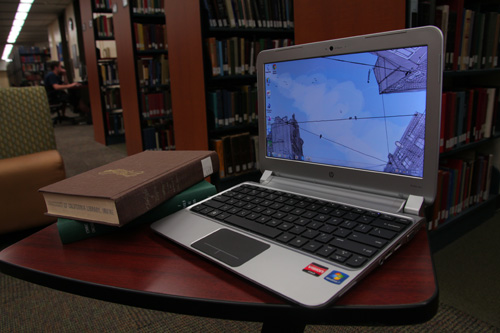
One of my favorite current “netbooks” is the popular HP dm1z 11-inch ultraportable. I put the word netbook in quotes because the netbook-class of laptops these days are far ahead in performance of similar size/price machines back in 2007. Today’s ultraportables can easily stream HD video content and even run lightweight 3D graphic games or applications.

The HP dm1z has been well reviewed by Engadget, Anandtech and other major publications, and for good reason. These wallet-friendly laptops are fast, capable, and stylish enough for all usage scenarios. And the current 2011 models run only $370 to $400 after coupon.

If an 11.6-inch screen size isn’t to your liking, you could opt for something like the 14-inch HP dv4t, another viable option in the budget computing category. This 14-inch laptop comes in many different configuration, with the cheapest of the bunch being a $470 Pentium B950 processor or similarly priced Core i3-2330M equipped laptop. If the processor model names don’t mean much to you, don’t worry, 99% of other buyers aren’t familiar with them either. Suffice it to say these processors will be fast enough for all the basic computing tasks mentioned above.

Finally, you can always head to the mainstream size of 15.6-inch laptops with the bestselling HP dv6 models. While some of the higher-end configurations run as high as $800, HP thankfully has offered some more affordable options that offer a pretty big performance bang for your buck, thanks to the brand new AMD A6 series processors, released just a few months ago.

At an attractive price of $570, the A6-3400M comes with 4GB of RAM, and even a Blu-ray player so you can watch high-definition movies straight from your laptop. The quad-core chip in this laptop is fast enough to move beyond basic functions to tackle even more intensive tasks such as medium video gaming or photo editing. An all-around great bargain for those needing a little bit more performance, a larger screen, but still at a reasonable price point.

The great thing about all of these laptop choices is they are all very capable machines that will last through the years. We’ve come a long way since budget laptops were first introduced years ago. Today’s “budget” machines are multitudes more powerful than the high-end machines of just a few computing generations ago, and their range of capabilities will happily perform up to many people’s expectations. From chatting with your relatives on instant messengers, sharing photos on Facebook with friends, or jumping on video Skype calls with personal or professional contacts in other cities, you’ll be well served by any of the three frugal-friendly laptops listed above. While a worldwide economic recession is far from an ideal situation (to say the least!), at least we no longer have to spend nearly a thousand dollars just to cover our basic computer needs.

How to Determine Needs vs. Wants

One of the biggest things you should do as an adult is to learn to distinguish between your needs and your wants. A mark of childhood is the inability to do just this. Most children don’t understand that there is even a difference between what they need and what they want, which is why grocery-store-fits over candy bars are so common in the under-five crowd.

Learning to determine needs vs. wants is a mark of maturity, but it’s unfortunately one mark of maturity that many adults haven’t learned to grasp yet. This is evidenced by the fact that so many people are living well beyond their means, racking up credit card debt to unbelievable levels in order to keep up with the Joneses.

If you’re struggling to rein in your spending – or if you just want to live a more fulfilled life – one of the first things to do is to learn to separate what you really need from what you just want. Here are a few ways that you can do that:

Understand What Makes People Happy

Lately, lots of psychologists and sociologists have been studying what it is that really makes people happy. Sometimes, there really is a link between money and happiness, but that link, it seems, only goes so far.

According to a study published in the Proceedings of the National Academy of Sciences, money can actually “buy” happiness on some level. This study found that people were increasingly happy as they made more money, but the happiness leveled out after they hit an annual income of $75,000.

Why is this? Researchers think it’s mainly because at an income of around $75,000, people can take care of their basic needs and fulfill many of their wants. Beyond this, though, the income just buys extra stuff that isn’t really necessary to basic existence or happiness. So, it’s a good idea to get your finances under control so that you don’t have to constantly stress about things like bills, mortgage payments, and retirement, but you don’t need to constantly be striving to make a six figure income, either.

Another study published at the meeting for the Society of Personality and Social Psychology showed that experiences, rather than things, are what make people really happy. In this study, people who spent money on new items they didn’t really need were apt to have buyers’ regret within a few weeks or months. Those who spent money on new experiences like a vacation, though, were more likely to look back on their purchases with satisfaction and to experience more happiness!

Truly Think About Your Purchases

Understanding what makes people in general happy can help you understand a little more about yourself. When you can pay for your basic needs, you’re more likely to be happy because you’ll have less stress in your life. However, it might take some time to learn to separate what you need from what you only want, and then it might take even more time to learn to prioritize your “wants” so that you can spend first on things you want most.

The first step to determining your needs is to write down the things you think you truly need, and then to mull over that list. What would happen if one of those things was missing from your life? Would you actually die or at least experience a lot of hardship? This list will actually look different for different people.

For instance, for some people, having a personal car truly is a need. In the Midwest, for instance, most cities are so spread out that you can’t walk or bike to work, and without a car, you might not be able to hold down a job. In other areas, though, where walking and biking are easier to do, you can more easily live without a car – even though it might be a little inconvenient.

Once you’ve got your list of needs down, it’s time to figure out what you want most so you can spend your discretionary funds wisely, and only after, of course, you’ve taken care of paying for what you need.

Think about some things you’ve been wanting to purchase in the near future. Think about how much use you would get out of these things and how they would add to your life. If you find that they would add a great deal to your life and that you would use them often, put them at the top of the list. You might be surprised at the things you end up crossing off of your “wants” list altogether when you really think about them and find that they would probably end up in a garage sale in two years!

One final technique for determining whether or not you really want something is to delay your purchase of it. Next time you’re in a store and see something you want, tell yourself you’ll go back and buy it in a week. If you still really want it in a week, go for it. Most things you want, though, will fall out of mind within a few days, and you won’t end up spending money on them!

Determining needs vs. wants is an essential skill for adulthood that you should start working on today. Whenever you have doubts about whether you need or merely want something, just think about what your life would be like without it. If you could survive – even with a bit of inconvenience – then the item is just a “want,” and you might be happier in the long run if you don’t spend money on it.

The author of the article, Daniela, blogs at Credit Donkey.

Reconceptualizing Education

I’ve spent nearly a lifetime, albeit a short lifetime, navigating through the United States educational system. I’ve succeeded, in a very traditional sense, throughout primary, secondary, and post-secondary curriculums. Yet, as these studies are coming to an end, I’ve been doing a great deal of questioning as to what I’ve really learned throughout this time, and what I think I should have been learning. Education serves as a reliable barometer as to what a society values. It seems readily apparent that this country values competent cogs above all else, or, industrialized citizens. Yet, what relevant role does this play in a rapidly changing American economy?

A great deal of the following ideas derive from Maslow (on a theoretical basis) and Huxley (on an anecdotal basis). What I wish I would have been learning doesn’t exactly differ from the subject matter I have been learning. The problem, though, presents itself in presentation, in the means. There is nothing inherently wrong with learning the governing laws of the world in which we inhabit (physics and mathematics). The subject matter is useful in a number of different fields. Yet where I think our educational system is failing us is in robbing these subject matters of their awe-inspiring aspects. Physics and mathematics, as they are currently taught, have been reduced to the rote memorization and application of formulas. Sure, this produces competent, linear-thinking engineers and mathematicians, but it does nothing to produce the novel, creative thinkers we covet, the next Einsteins, the next Leibnizs. These men were taught to see beyond the formulas we’re all familiar with. The formulas weren’t presented as reality, they were guidelines to a far more complex reality. No one can be expected to fully immerse themselves into a subject matter if they are not encouraged to, and presented with the awesome nature of their subject matter.

This is not to imply that every man will be naturally inclined to be amazed by the governing laws of reality, as in mathematics. Our various idiosyncrasies dictate that our curiosity and our creative abilities will naturally lead us to absorption in one field over another. The point is, that we must foster an environment for these innate curiosities to be expanded upon and explored. This is how we produce the individuals whose curiosity will produce the next wave of scientific and artistic breakthroughs. As it currently stands, we have made ourselves reliant on the extraordinary perseverance of a select minority to foster their own path to true education. Yet this is to deny ourselves the rewards of an entire population’s worth of untapped potential.

Most students are lost at a very early age as they find their education being dictated to them in a disinterested fashion, less concerned about the fostering of curiosity and wonderment than the reproduction of meaningless answers on a standardized test. It must be recognized that the need for industrialized cogs is quickly diminishing within this country and if we are to persist within this changing environment, then the core tenets of our educational system must change with it. The emphasis must be turned away from the production of competent works, to the production of competent thinkers, of competent innovators. Our system, as it currently operates, seems set up to inhibit the production of such individuals.

This article was written by Anthony Benedict. Anthony helps to run and maintain inetzeal.com. This website is an entity of an Internet marketing company which provides many services, which includes a white label link building service, as well as many other white label SEO services.

Airline Mile Credit Cards

Airline flights, hotel stays, rental car purchases – all of these things are better when they’re free! Learn the secrets to getting these free perks from your favorite airline, or from your card company…

The frequent flyers among us know the secret – those points we earn are worth their weight in… well, miles. Whether you travel for business or pleasure, if you’re going to fly, you might as well take advantage of the perks that the airlines offer us. And if you’re someone who uses their credit card often, why not earn miles for that too? It’s amazing just how quickly the money that you were going to spend anyway, can earn you a free flight. But just because all of the airlines offer credit cards that accrue points, not all of these programs are equal. Some things to look for when evaluating a credit card that earns frequent flyer or mileage points:

Most airline mile credit cards are only good for flights on that airline. In addition, they often have restrictions on when you can fly.

Many airlines have affiliate programs that allow you to also use your points for hotel and rental car purchases, so check before you sign up for one. Usually the cards offered by the airlines charge an annual fee of between $35 and $150, or more. Also, since the cards are not issued by the airlines themselves, but rather by a credit card company, be sure to check the issuer’s own fees and penalty structure. Different airlines reward purchases differently, and some are more generous than others. Be sure to check around for the best plan that meets your needs.

An alternative to a card issued by a specific airline is what’s called a travel rewards card. Most credit card companies offer some type of travel reward or points program. The way these programs are structured can offer a little more flexibility than an airline credit card program. For one thing, the points can generally be used toward flights on any airline. For another, they typically accrue more points for purchases. Also, these credit company rewards cards usually don’t expire the way miles with an airline can.

As with all credit card offers, be sure to read the fine print in the card agreement. Many of the reward programs – whether sponsored by an airline or a credit card company – can quickly turn into a money-vacuum if you’re not careful. Be sure to pay off the money you charge as quickly as you can, to avoid what are usually some pretty hefty interest rates. Also, always pay your bill on time, if you don’t want fees and penalties to eat into your hard-earned miles. Finally, take advantage of the double- and triple-mile rewards that your card offers, as these can really help you to rack up the points and get you into the air sooner than you think.

Finally, don’t get so enthralled with the idea of earning points and miles that you end up making purchases that you don’t need and will never use. Just because a purchase earns you miles for every dollar, doesn’t make it a good deal. On the other hand, if it is a purchase that you would normally make anyway, and a partnering vendor is offering triple reward miles – in that case it may make sense to take advantage of a good thing. Bottom line; be smart and you’ll be rewarded – in free travel!

Today’s guest post comes courtesy of Compare Cards.

Finding Room for Mindfulness in Small Spaces

small house


small house

When you live in a small space, especially a shared space, it can be difficult to find a way to create the appropriate setting for mindfulness or meditation. If you are persistent and creative, you can create a space that will allow you to meditate quietly in almost any location. The key is to discipline your mind so that your surroundings play a small part in your ability to remain mindful for a period.

Create Temporary Space with Folding Room Dividers

If you feel the need to block yourself from the rest of the room while you are meditating, a small room divider can be a convenient way to create a tiny mindful space. Dividers are available in many different colors and textures to suit your needs. You can unfold the divider to block yourself from the rest of the room while you meditate, then fold it up and put it away again when you are no longer using it. The divider can be effective even if it only blocks one side of the space. It is not necessary to block off four walls or pen yourself in entirely.

Transforming a Corner of Your Room

Sharing a space with a roommate can make it more challenging to set apart a special area for mindfulness. Try to find an area of the home that is strictly yours, like the bedroom. Place a simple candle on your nightstand, and light it when you are in the room for meditating purposes. When you light the candle, consider your bedroom a quiet and safe place. When the candle is not lit, you can use your room all of the other purposes it serves.

Taking Time Away From Home

Some people find that they need to go outside of their homes in order to be fully mindful. Your car can be a wonderful private place for meditation. The seats in many cars can be more comfortable than traditional sofas or armchairs. Park in a comfortable place where you know you will not experience interruptions. Anywhere that allows you to park and sit alone for half an hour will be fine. Since your car is movable, you have more control over the noise level than you would have inside a shared home.

Mindfulness Does not Rely Entirely on Location

Once you gain discipline with your meditations, you may find that you don’t need to set apart a specific space to be mindful. You can meditate in your favorite chair in the main room of the house. You might prefer to create a mindful space while leaning against some pillows in your bedroom. The peace of mind that you bring to the space when you are centered and fully mindful will transform any area into the right place for being mindful. You might never be comfortable meditating in a room full of talking people, but you may be able to create a peaceful place in a corner of your home that is not strictly set apart.

Jessica Bosari enjoys writing helpful articles for AffordableHousingForRent.com. The site helps those living on smaller incomes find affordable apartments.

Photo Some rights reserved by Andy Hay

Coping with Depression After a Natural Disaster

Natural disasters cause more than just physical damage to people and property: they can also cause tremendous emotional and psychological damage. If you are the survivor of a natural disaster, you may have lost your home, sentimental belongings, a pet, or a loved one. You may have witnessed tragic events that will remain in your memory for the rest of your life. These kinds of traumas are difficult to move past, but there are ways to make the process a little bit easier.

Remain Active

In the aftermath of a disaster, it may be difficult to pick yourself up and get back into a daily routine. You may feel tired, hopeless and despondent. However, forcing yourself to maintain some kind of daily routine may help take your mind off of the disaster and help give your life structure.

Treat Your Body Well

Do your best to take care of your physical health after a disaster. Make sure that you are drinking plenty of water, sunlight, and exercise, and that you are eating well-balanced meals. Maintaining your physical health will make it easier for you to maintain your mental health.

Set Manageable Goals

When you are very depressed, it may be nearly impossible to maintain a routine that is just as active and productive as your routine was before the disaster. If this is the case, set manageable goals for yourself, however modest, and make sure that you meet them. Here are some examples of goals you may set:

- Cooking at least one meal per day at home
- Taking a walk at least once per day
- Scheduling time to spend time with friends at least three times per week

Allow Yourself to Grieve

If you are the survivor of a disaster, you may have the instinct to suppress your grief, striving to be strong, help others, and perform your duties despite the internal sorrow you are experiencing. Although this is noble and admirable, in the long-term, allowing yourself to go through the natural grieving process will allow you to be stronger, healthier and more supportive to your loved ones.

Avoid Repeated Viewing of Disaster Coverage

Only view as much disaster news coverage as is necessary to stay informed. You already have enough emotional stress to deal with, without subjecting yourself to reliving or re-witnessing disaster scenes through television or news articles. If you are safe and well-informed without watching this coverage, turn it off.

Know that You are Not Alone

Chances are that you were not the only one affected by this disaster, so join hands with others who are going through a similar process to you. These people may include friends, family, or neighbors. You can share experiences, start a support group, and exchange favors. Be honest and open with one another, and know that you can get through this together. If you do not have access to support in your local area, explore the Internet for online support groups for disaster survivors.

Get Professional Help

If you are in a position to afford psychological care, find a therapist who is experienced in counseling disaster survivors. Especially if you are experiencing recurring flashbacks, nightmares, or panic attacks, it is important to see a professional who can help you regain your emotional health.

This article was written by Wendy, who writes at Depressions Symptoms.

Highly Effective Ways To Pay Down Credit Card Debt

lolcat credit card

If you have run up your credit card bills and wonder how you are going to catch up and pay them off, you are not alone. Millions of Americans are in way over their head when it comes to credit card debt. The good news is, it’s not impossible to pay off credit card debt, even though it may seem like it right now. With discipline, you can become debt free and use the experience to improve your long term financial situation. Paying off debt does take sacrifice, determination and hard work - there are no easy fixes. Here are some of the most highly effective ways you can eliminate your credit card debt quickly and get yourself back on track financially:

You Really Can Give Up Cable TV

Sacrificing cable TV is not something people really want to do - but if you have a pile of credit card bills that you want to pay off quickly, this is a great way to get started. Cable bills can run into the hundreds of dollars per month, so if you temporarily give up cable television or at least reduce your subscription cost you can put that extra $100 or so toward your credit card debt. If you’re worried about missing some of your favorite shows, check out the network websites - many of the shows you watch are probably available online. If you’re just a little bit technical, you can even connect your computer and tv and even watch your shows on your television instead of your computer monitor.

Giving up cable television is a bit of a lifestyle change for many families, but think about how that extra $100 or so per month will speed up your debt repayments.

Consolidate Your Phone Lines

Most families have multiple cellular phones and a phone line or two installed in their homes. Do you really need all of them? Cell phones have become part of our world and most of us can’t imagine life without them but believe it or not - people survived without them just fine a few years ago! If you really can’t give up the convenience of your cell phone, consider downgrading your plan, texting less, skipping the data plan and using the phone for communication only to reduce your monthly cell phone bill. You can also consider whether you really need the home telephone line if you have your cell phone available all the time - it may be less expensive to upgrade the cell phone plan to an unlimited plan and cancel your home phone. Look at the different scenarios for your phone bills and find the option that will save you the most money and still meet your needs for communication. Apply the savings to your debt repayments.

Think About Trading In Your Car

For people who are in over their heads in debt or are just serious about changing their ways, trading in your car may be an option. The American way is to have a new shiny car every few years, but the result is generally a car payment that never ends. When we finish paying off one car loan or lease, we turn the car in for a new one and start our payments all over again. You may consider turning your car in for a less expensive, reliable used car that has a lower monthly payment or better yet - one you can pay for in full. If you do this, make sure you apply the full amount that you used to send to your car payment to your debt.

Cook Your Meals From Scratch

You might be in sheer panic with this one, but home cooking does not have to take hours of your time and it can save you a small fortune over eating out or buying prepared meals each month. Also, eliminating unnecessary items like junk food and soda or other beverages can really help reduce your grocery expenses each month. The money you save on food can be applied to your debt to pay it off faster, and once paid off you can decide to return to your favorite foods - but you may find the side effect of this sacrifice is living a healthier lifestyle!

Stop Shopping

Except for necessities like groceries and items your kids absolutely need, take a break from shopping. This means no unnecessary spending for several months at a time. Most of what we buy we don’t need anyway, and if you want to tackle debt, not spending is a great way to have the money to do so. You would be surprised at how much money is wasted each month on items we forget we buy. If you don’t believe me, keep a 90 day record of every penny coming in and every penny you spend, and then look at where the money is going. At the end of 90 days, add up everything on the list that isn’t essential, even the pack of gum or cups of coffee, and see just how much you spend without realizing it! Most people find this to be a very eye opening experience.

Radically changing your spending habits is not easy to do, but your debt can take years longer to pay off without making these lifestyle changes. You don’t have to give up these little luxuries forever - just make temporary sacrifices to free up money so you can pay off debt and stop paying interest and fees. Once you’re out of debt, you can better decide how to spend your money. Chances are good if you commit to these changes until your debt is paid off, you’ll learn strong money management skills that will ensure you don’t make the same mistakes again. Jump in with both feet and give it a month or two. You may find out that you actually enjoy the lifestyle changes and you certainly will feel less stressed as your debt begins to disappear.

Jennifer Davis blogs about reducing credit card debt with balance transfer credit cards at SmartBalanceTransfers.com, a consumer education website designed to help people find 0% APR balance transfer deals.


Photo: Some rights reserved by Tony Webster

5 Time Management Quotes by Brian Tracy

Time management skills are essential for anyone who wants to breed success. How you manage your time will determine how fast you will succeed in your endeavor. Brian Tracy, author of books on time management and personal productivity, says one of the differences between successful people and average people is how they manage and value their time. After reading many of his books I’ve gathered five of his best quotes on time management.

1. “If you have two frogs, eat the ugliest one first.”

Eating a frog is an analogy of doing your most important tasks first thing you wake up. Brian Tracy got it from the saying: If the first thing you do each morning is to eat a live frog, you can go through the day with the satisfaction of knowing that that is probably the worst thing that is going to happen to you all day long! By doing your most important task first you will less likely procrastinate on the other tasks later in the day. By getting the biggest task done first you also set the tone for the rest of the day for getting work done.

2. “One of the most important rules of personal effectiveness is the 10/90 rule.”

The first 10% of time that you spend planning and organizing your work before you begin will save you as much as 90% of the time in getting the job done once you get started. This is not to be confused with the 80/20 rule which is about determining your most valuable tasks. The 10/90 rule is about planning when and how you do your work. Without a game plan of how you are going to tackle the tasks at hand or not even knowing when you will do it will make you more likely to procrastinate. Whenever you start a new task or project, think about the 10/90 rule. Plan first, then start.

3. “The fact is that you can’t do everything that you have to do. You have to procrastinate on something. Therefore, procrastinate on small tasks.”

Let’s be realistic here; everyone procrastinates. If you have to do it, you might as well creatively procrastinate on things that aren’t as important. It’s a good idea to make a separate list of tasks that are not important but have to get done at some point. For example, organizing your bookshelf or cleaning out your closet are not really important but have to get done at some point. Whenever you feel like procrastinating, look over this list and see what you can knock off without much effort. You still get work done even when you feel like you are procrastinating.

4. “There is never enough time to do everything, but there is always enough time to do the most important thing.”

Brian Tracy also calls this the “law of forced efficiency”. Today we are overwhelmed with information and things we need to do. You often hear people say “I wish I had more time” when they feel overwhelmed. What he is saying is that if the task is really important, you will get creative and find time for it to finish. Sure, you might really have too many things to do but that is not the core problem. Instead, you want to ask yourself “what is the most valuable use of my time, right now?” and work on that right away. Anything else in comparison is relatively unimportant.

5. “The purpose of time management and getting more done in less time is to enable you to spend more face time with the people you care about and doing the things that give you the greatest amount of joy in life.”

The three biggest factors for determining your happiness are your health, wealth and relationships. With the right time management skills you can free up time so you can not only feel happier but also you can actively spend time on doing things that make you feel happier. Relationships with friends, family and your significant other are important for feeling happy so make sure you spend time with them.

Thanh Pham is a productivity nerd and he writes on his blog about time management and productivity.

1 2 3 4 5